Language › Part 2 › Unit 2 › Lesson 6
Unit 2 · Lesson 6 / 8
At the shop — í búðinni
Ask about a product, understand the price, request a smaller or cheaper option, and discuss colour, delivery and payment.
Markmið What you will learn
- Ask a price with Hvað kostar…?
- Compare with stærri/minni and dýrari/ódýrari
- Use questions about colour, delivery and card payment
Sjáðu og segðu Learn from the visual
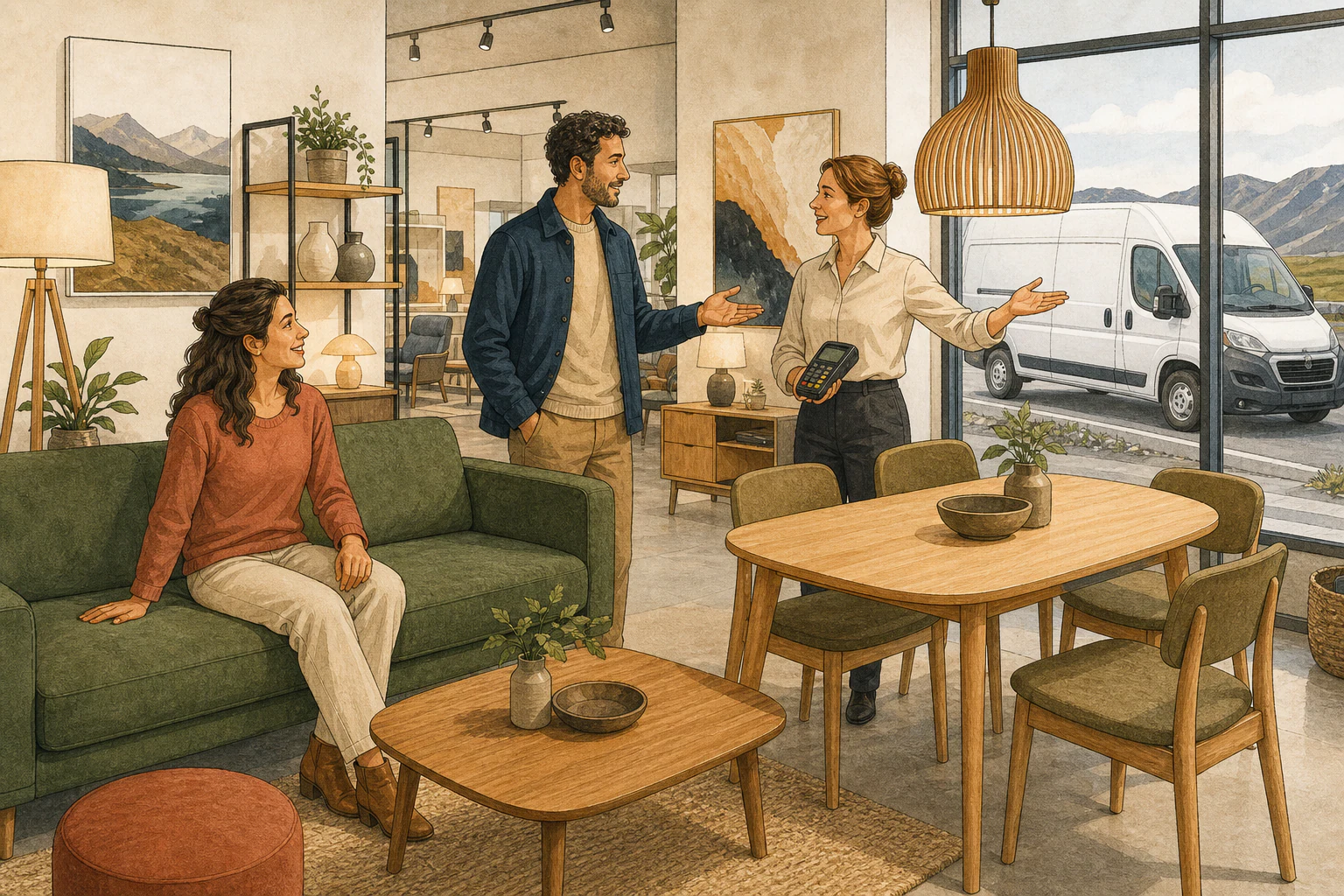
Choose in the furniture shop
Elif compares two sofas; Ari reads the label and the assistant explains delivery.
Málfræði Grammar and usage
| Basic adjective | Comparative | Example |
|---|---|---|
| stór | stærri | stærri sófi |
| lítill | minni | minni sófi |
| dýr | dýrari | dýrari lampi |
| ódýr | ódýrari | ódýrari stóll |
When pointing in a shop, use þessi (masculine/feminine) or þetta (neuter): þessi sófi, þessi hilla, þetta borð.
Orð og setningar Words and sentences
- Hvað kostar þessi sófi?How much is this sofa?
- Má ég sjá þetta borð?May I see this table?
- Áttu minni sófa?Do you have a smaller sofa?
- Þessi er ódýrari.This one is cheaper.
- Er hann til í grænu?Is it available in green?
- Ég ætla að fá þennan.I will take this one.
- Get ég borgað með korti?Can I pay by card?
- Get ég fengið kvittun?Can I get a receipt?
- Getið þið sent hann heim?Can you deliver it to my home?
- Hvenær kemur sendingin?When will the delivery arrive?
Samtal Dialogue — Choosing a sofa
- Má ég sjá þennan sófa?May I see this sofa?
- Já, auðvitað.Yes, of course.
- Hvað kostar hann?How much is it?
- Hann kostar 189.900 krónur.It costs ISK 189,900.
- Áttu minni og ódýrari sófa?Do you have a smaller, cheaper sofa?
- Já, þessi er minni og hann er til í grænu.Yes, this one is smaller and available in green.
Culture and usage
Card payment is widespread in Iceland, but the language goal here is not to make an absolute claim about payment habits. It is to learn a useful question: Get ég borgað með korti?
Everyday use · A2
Understand the pattern and build your sentence
What am I learning?
Build a conversation for viewing an item, asking its price, comparing it and paying. Choose the short question needed for each step.
Why this structure?
Má ég…? asks permission; get ég…? can ask about an option or make a request. Clearly name the item or action after the polite opening.
When do I use it?
Discuss colour, size and payment in an imaginary shop. Practise the sentences without making a real purchase or payment.
How do I build it?
Start by asking to see the item: má ég sjá + item. Ask the price with hvað kostar…? and use minni and ódýrari for smaller or cheaper options.
Which difference matters?
Minni compares size and ódýrari compares price. A cheaper item is not necessarily smaller; state which feature matters.
Which mistake do I avoid?
Watch noun forms when saying this or it: sófi and þennan sófa look different. Ask about colour or delivery separately after hearing the price.
Three recorded examples
Reference resources: BÍN · Árnastofnun · Icelandic Online
Everyday use · A2
Recorded role practice
Listen and follow first. Then choose a role: your replies close, so you can answer aloud after listening to the other speaker. Reveal your reply to compare when needed.
The whole conversation is visible. Listen and follow the turns.
Say your reply; reveal the model
Say your reply; reveal the model
Say your reply; reveal the model
Say your reply; reveal the model
Say your reply; reveal the model
Say your reply; reveal the model
Everyday use · A2
Apply it without looking
Play a customer and shop assistant. Ask to see a sofa, ask its price and discuss a smaller, cheaper option; then swap roles.
Reveal a starting model
AThis personal checklist does not change your score or course completion. Additional practice:
Lokapróf — Lesson check
Exercise 1What does ódýrari mean?
Exercise 2borð is neuter. Which phrase means “this table”?
Exercise 3Write “How much is this sofa?” in Icelandic.
Exercise 4Write “Can I pay by card?” in Icelandic.
Exercise 5Match each adjective with its comparative.
This lesson is part of Learning Icelandic 2. Completion is stored in this browser.