
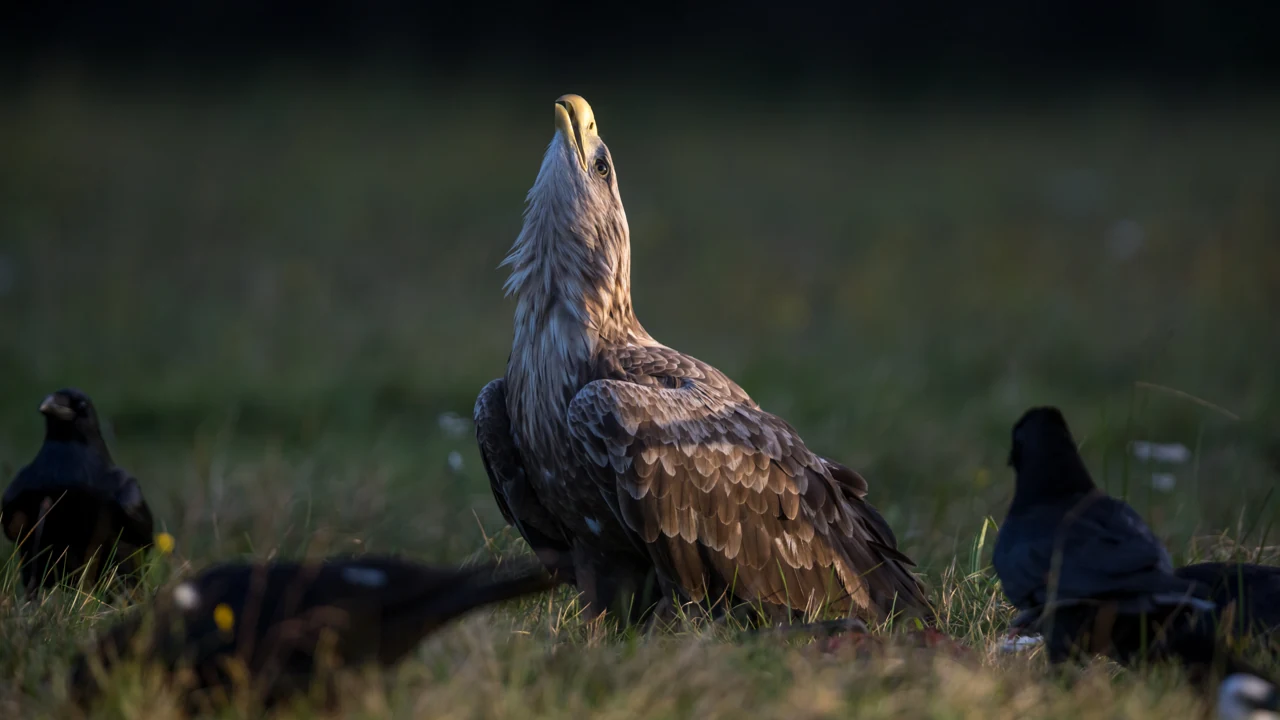

A sea eagle does not eat only fish
The name can suggest a bird living entirely on fish. White-tailed eagles also take birds and eat carrion. Icelandic research summarised by Fuglavernd shows the importance of birds in their diet. It is misleading to picture this predator only as a bird plunging into water for fish.
Its life in Iceland
Náttúrufræðistofnun reports 90 pairs in its 2024 assessment; this is not a 2026 census. The great majority are around Breiðafjörður. An important habitat is not a promise of an eagle on every boat trip or coastal walk. This guide does not publish nest locations.
 İzlandapedia

Protection did not bring instant recovery
Eagles have been fully protected in Iceland since 1914, but legal protection did not immediately remove all pressures. Fuglavernd’s own origins are tied to efforts to save the bird from extinction in Iceland. A present-day encounter reflects years of conservation work as well as an impressive animal.
 İzlandapedia

Why nest distance matters
Article 19 of Act 64/1994 prohibits approaching eagle nests within 500 metres from 15 March to 15 August, subject to narrow statutory exceptions. Disturbing nests and nest sites is also prohibited. Do not treat the distance as a target to approach. Seek the relevant authority’s permission for activities requiring it; consult the source for full provisions.
Watching without closing in
Our suggestion is to watch with binoculars from a permitted coastal spot or go with a guide familiar with protection rules. Do not flush a bird, leave bait or follow it with a drone. If you suspect a nest nearby, move away rather than searching for a photograph. Do not share geolocated nest photographs.
Where were these photographs taken?
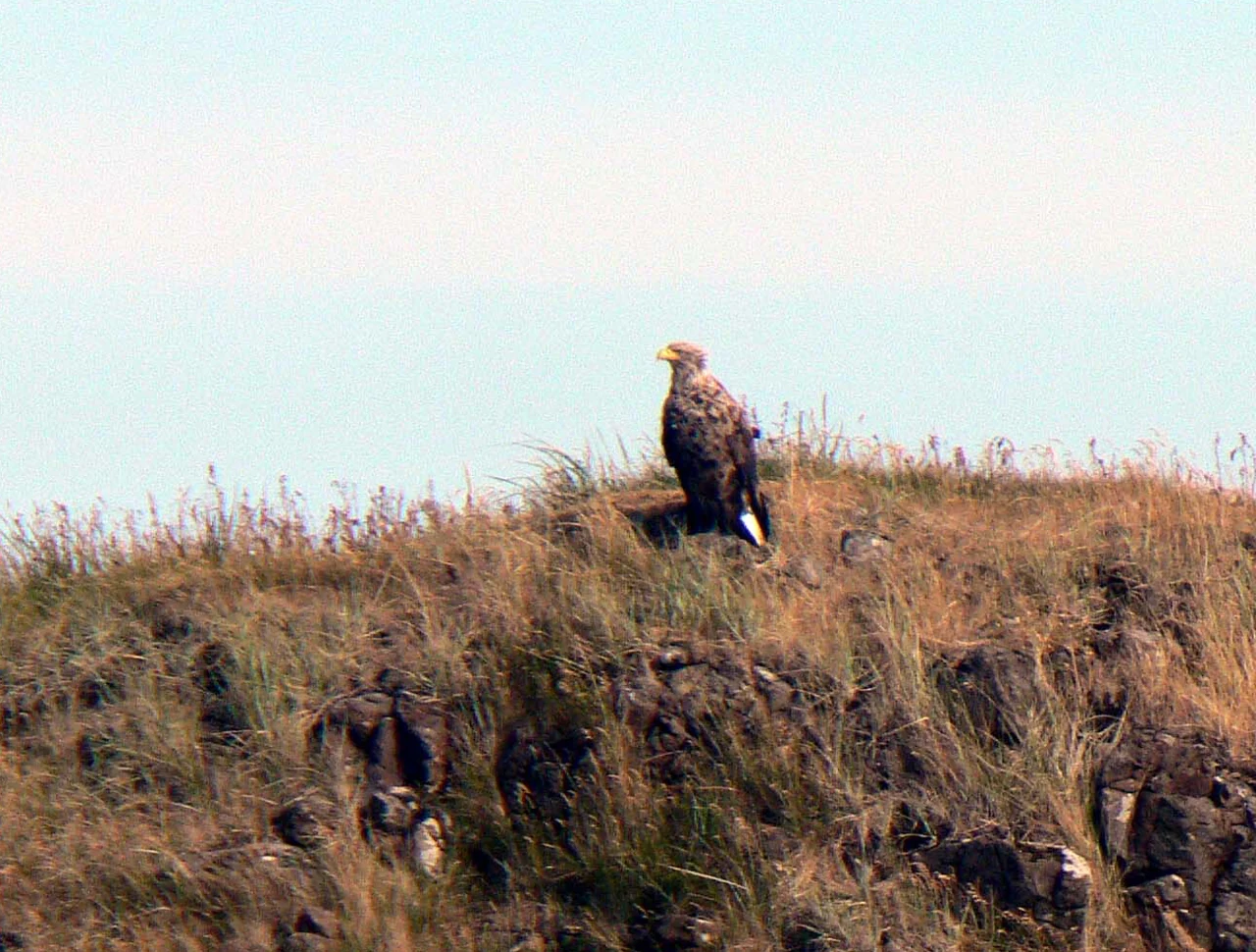
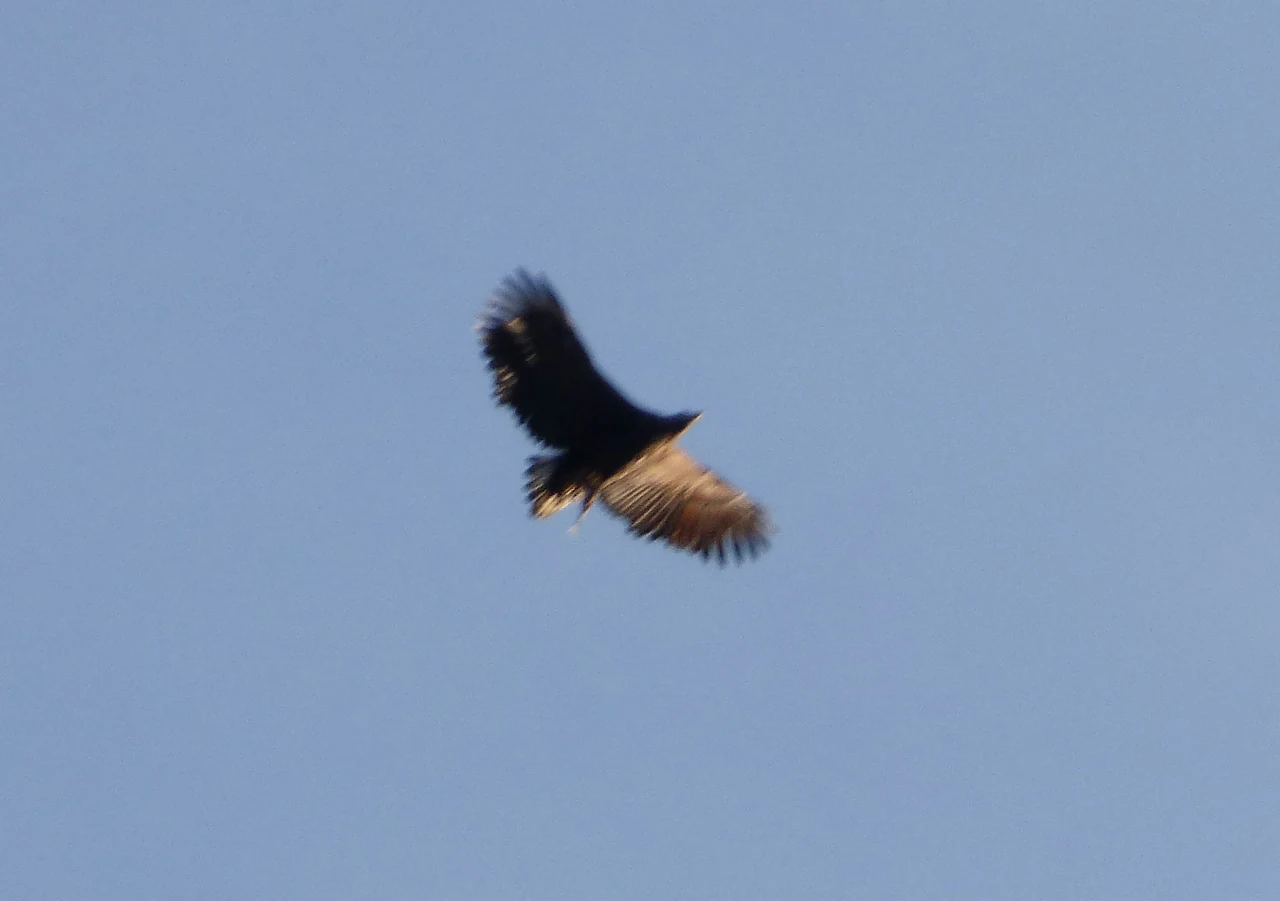
The large species photograph at the top was taken in Poland. It is not presented as an Icelandic landscape or a current Iceland sighting. Two other photographs show an eagle on an island in Breiðafjörður and one flying in Iceland. Every photograph carries its location, photographer and licence.
Frequently asked questions
What does haförn mean?
Haförn is the Icelandic name for the white-tailed eagle, Haliaeetus albicilla.
Is it endangered in Iceland?
Its Icelandic assessment is EN; its global assessment is LC. The two geographical scales should not be confused.
Are the 90 pairs a current count?
No. The figure is explicitly dated to the 2024 assessment and is not presented as a new census.
Sources and photograph rights
Sources checked on 30 October 2026. Historical figures are labelled with their reference year. Recheck local access rules and visitor instructions before travelling.
- Náttúrufræðistofnun · Haförn / 2024 population assessment
- Fuglavernd · Haförninn
- Alþingi · Act 64/1994, Article 19
- Fuglavernd · History of the society
Resized and converted to WebP for the web; the sharing copy is cropped. The photograph’s licence is retained for these derivatives.