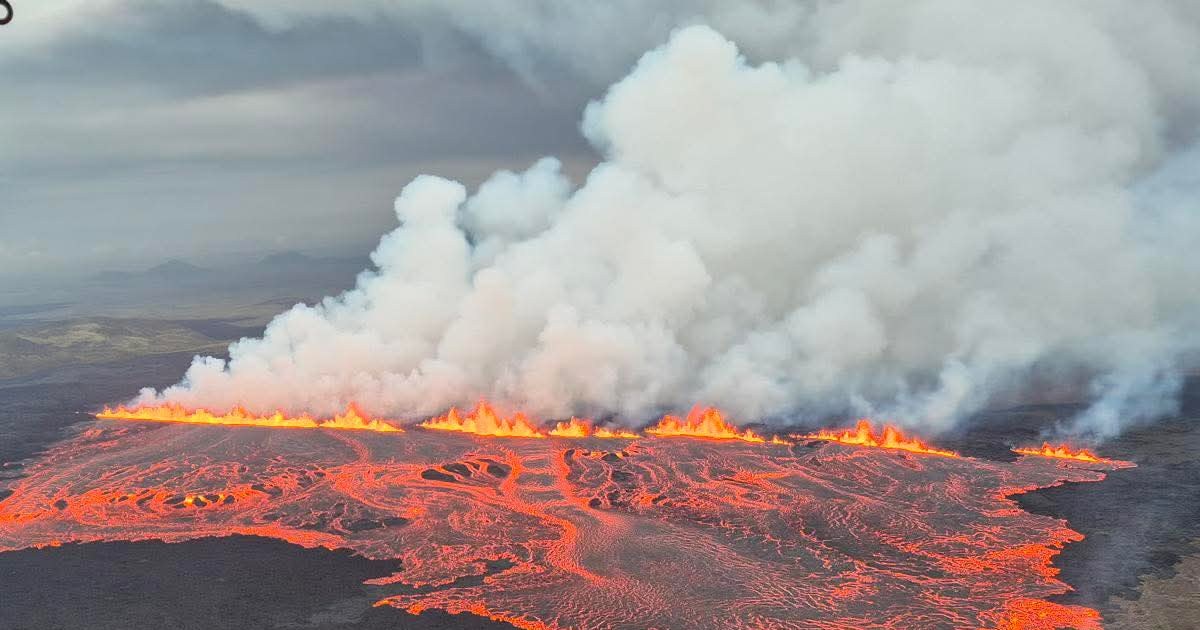
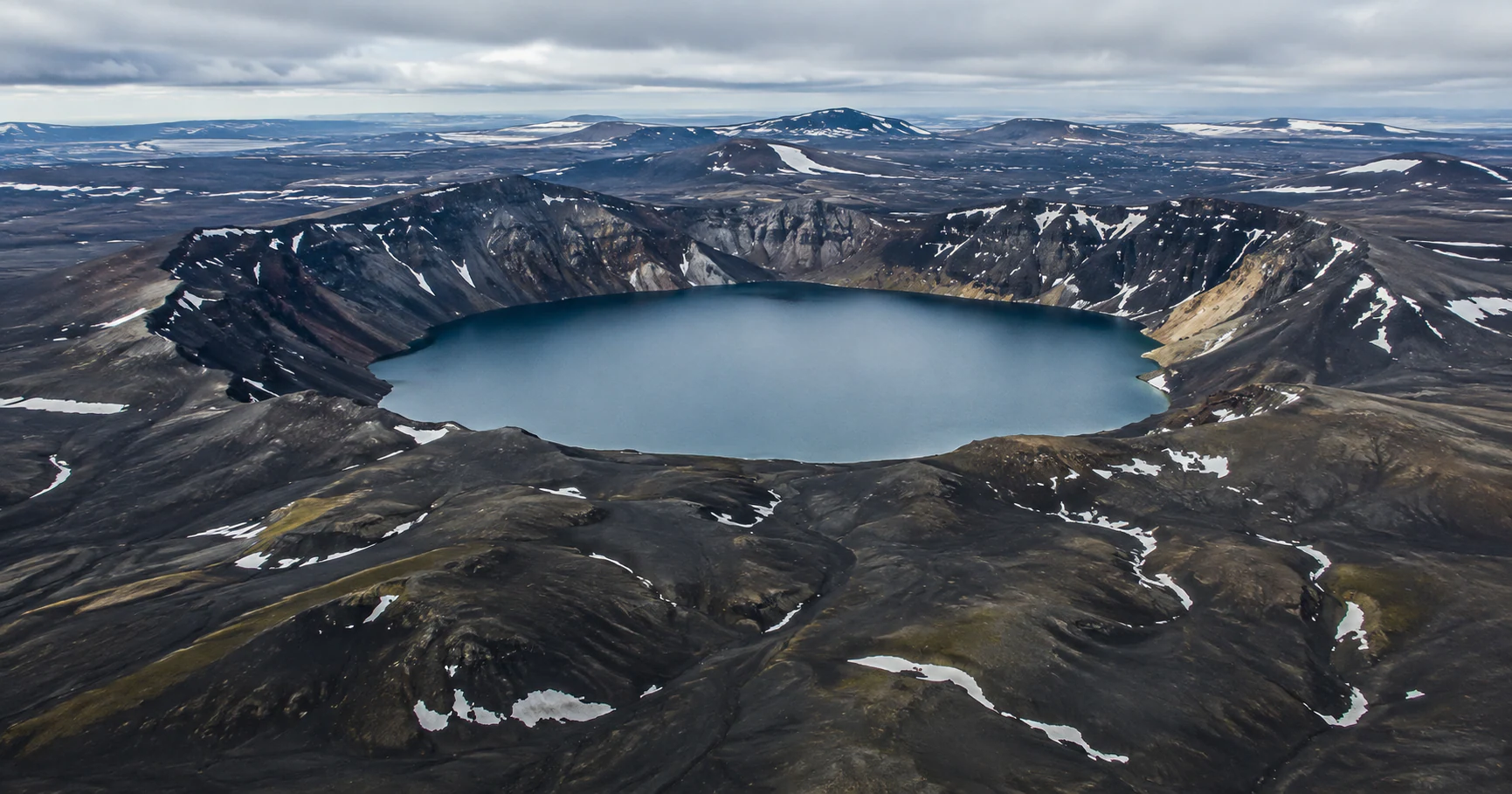
Iceland’s latest official Reykjanes update does not describe an active eruption. It describes something less visible but still important: slow ground uplift and continued magma accumulation beneath Svartsengi. The Icelandic Meteorological Office said on 15 September that seismic activity remained low and the hazard assessment was unchanged. It also said continued pressure could lead to a magma intrusion along the Sundhnúkur crater row and possibly another eruption, with short warning still possible.
For travellers, geography matters. Reykjavík, Keflavík International Airport, Blue Lagoon, Svartsengi and Grindavík are not interchangeable labels for “Iceland volcano”. The first two are operating as major travel hubs; Blue Lagoon and Grindavík sit much closer to the monitored area and require more attentive checks.
Most visits are continuing, but there is no honest way to promise that every place is absolutely safe. The current concern is localised on the Reykjanes Peninsula. Travellers should avoid restricted ground, check official updates on the day of travel and follow any evacuation or closure instruction immediately.
What is happening in Reykjanes right now?
Measurements show that the ground around Svartsengi has risen by about five centimetres over the past three months. Uplift is a surface sign of pressure building several kilometres below ground. It is not the same as an eruption.
- UpliftThe ground deforms upward as pressure builds below.
- Magma accumulationMolten rock is added to a reservoir at depth.
- Magma intrusionMagma moves into a crack or dike; it may or may not reach the surface.
The official 15 September update described low seismic activity, with a slight rise in small earthquakes. It could not predict when a future intrusion might occur. That uncertainty is the reason “quiet” should not be read as “finished”.
Is Reykjavík affected by the volcanic activity?
No direct operational impact on Reykjavík was reported in the sources checked for this update. The capital is east of the active Svartsengi–Sundhnúkur area. That does not make indirect effects impossible: wind can carry volcanic gases during an eruption, and transport changes elsewhere can affect itineraries. Check official air-quality data when authorities advise it.
Is Keflavík International Airport open?
Yes. Keflavík Airport’s official live board was showing departures and arrivals on 23 September. Individual cancellations were present, but the public board did not attribute them to volcanic activity; travellers should not infer a cause from a cancellation list. Check the airport and your airline for your specific flight.
An eruption in Iceland does not automatically close KEF. Aviation disruption depends heavily on whether an event produces ash at altitude and where winds carry it. The 2010 Eyjafjallajökull eruption involved explosive interaction with ice and a widespread ash cloud. Recent Reykjanes fissure eruptions have generally been lava-producing events, but future aviation effects cannot be guaranteed in advance.
Reykjanes, in geographic context
Real coastlines and shaded terrain, shown at two scales.
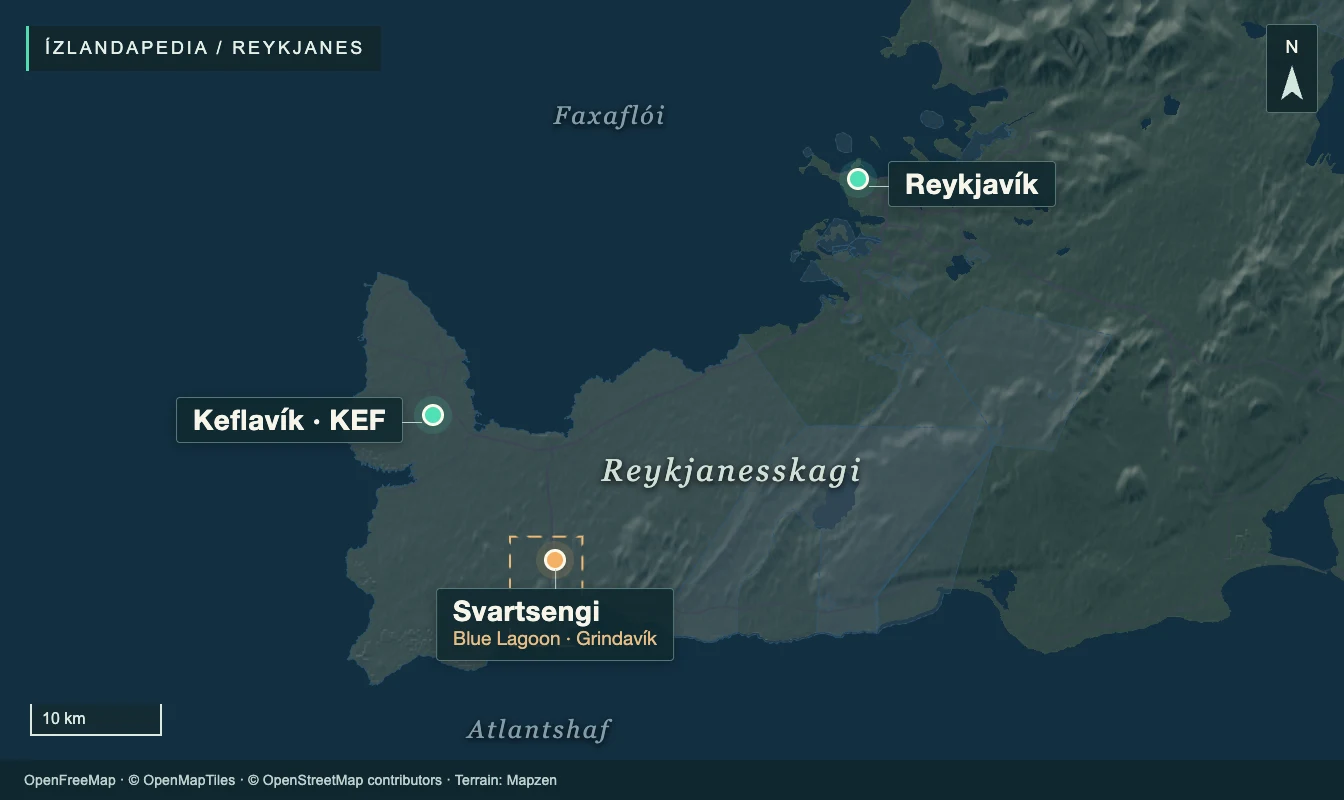
Keflavík Airport lies to the west; Reykjavík is to the northeast. The dashed frame marks the area enlarged in the second view—not a hazard boundary.
Open large ↗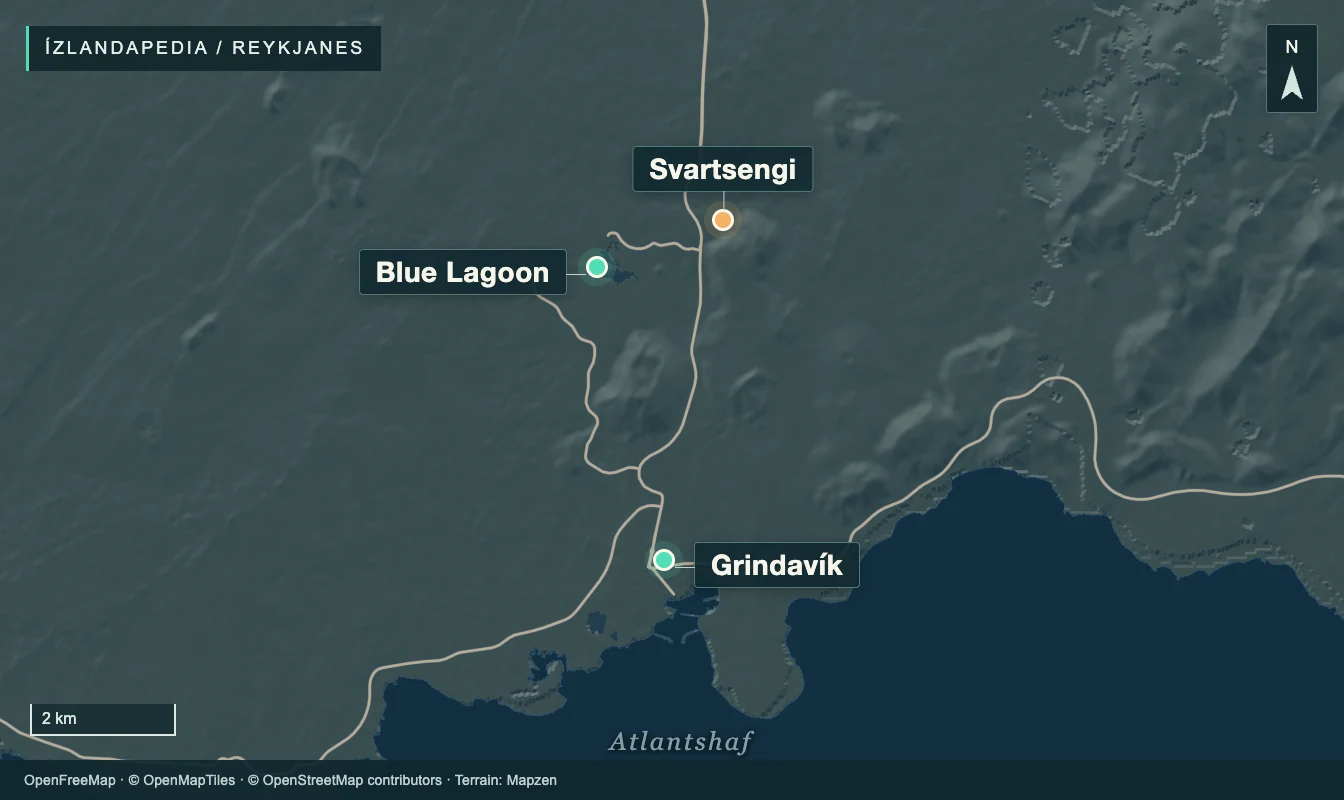
Blue Lagoon lies west of the Svartsengi geothermal area; Grindavík sits on the south coast. Markers show locations, not whether a place is open or safe.
Open large ↗Map data, locations and licences
Blue Lagoon · Svartsengi · Grindavík · KEF / Isavia AIP. WGS84 · 23.09.2026.
Is Blue Lagoon open?
Yes, according to the official opening-hours page checked on 23 September. Blue Lagoon lists daily winter hours of 08:00–22:00 for this date and identifies Grindavíkurvegur (Road 43) as its main access road. Because the resort is beside Svartsengi, its status can change independently of Reykjavík or the airport. Recheck the official seismic-activity notice and your booking shortly before departure.
What is the situation in Grindavík?
Grindavík is open, and municipal life is visibly resuming, but the town remains under an official uncertainty phase and long-term natural-hazard preparedness. A revised assessment published by Civil Protection on 22 September found the level of safety comparable with other Icelandic settlements exposed to persistent natural hazards—provided essential monitoring, preparedness and protective measures remain active.
That conditional wording matters. Visitors should stay on marked routes, respect local life, avoid damaged or restricted ground and never treat the town as disaster scenery. Fresh or unstable lava and fissures can remain dangerous after visible eruptive activity has stopped.
Tourist impact at a glance
| Location | Current status | Tourist impact | What to check |
|---|---|---|---|
| Reykjavík | No direct operational impact reported | Trips continuing; indirect air-quality or transport effects remain possible | IMO, air quality |
| Keflavík Airport | Operating | Check your individual flight | KEF live board, airline |
| Blue Lagoon | Open | Closer to Svartsengi; status may change locally | Blue Lagoon, Road 43 |
| Grindavík | Open with ongoing preparedness | Respect local hazards and instructions | Civil Protection, municipality, SafeTravel |
| Volcanic area | Monitored; local hazards | Do not enter restricted ground or walk on new lava | IMO hazard map, SafeTravel |
Can an Icelandic volcanic eruption cancel flights?
It can, but not every eruption will. Fine volcanic ash can damage jet engines, reduce visibility and contaminate aircraft systems. An explosive or subglacial eruption may create a different aviation problem from a basaltic fissure eruption. Wind direction, plume height and airspace decisions all matter. The useful rule is simple: check the actual flight, not a generic social-media claim about “the Iceland volcano”.
What should travellers do?
- Read SafeTravel for alerts and access advice.
- Use umferdin.is for roads and closures.
- Read the Icelandic Meteorological Office update and current hazard map.
- Check KEF live departures and your airline.
- Check the Blue Lagoon’s own status before leaving.
- Obey closures; never walk on fresh lava, cross barriers or park illegally to view an eruption.
Why Reykjanes keeps making news
Iceland straddles the Mid-Atlantic Ridge, where the North American and Eurasian plates move apart. Magma can rise through the stretched crust. On Reykjanes, activity reawakened after centuries of quiet; eruptions returned at Fagradalsfjall in 2021, followed by further events and, from late 2023, repeated intrusions and eruptions in the Svartsengi–Sundhnúkur system.
Reykjanes volcanic timeline
The Fagradalsfjall eruption begins—the first eruption on the peninsula in roughly eight centuries.
A new eruption begins in Meradalir.
An eruption starts near Litli-Hrútur.
A major dike intrusion crosses beneath Grindavík; the town is evacuated.
Seven eruptions occur along the Sundhnúkur crater row: 18 Dec, 14 Jan, 8 Feb, 16 Mar, 29 May, 22 Aug and 20 Nov.
The eighth and ninth Sundhnúkur eruptions occur. The July event later ends; magma accumulation resumes.
No active eruption is described; slow uplift and magma accumulation continue beneath Svartsengi.
Icelandic practice · A2–B1
Learn the status in Icelandic
Listen with the site’s Talrómur voices, then compare the natural English and Turkish meanings.
Audio is loading…
- Ekkert eldgos stendur nú yfir á Reykjanesskaga.No eruption is currently underway on the Reykjanes Peninsula. · Reykjanes Yarımadası’nda şu anda püskürme yok.
- Landris og kvikusöfnun halda áfram við Svartsengi.Uplift and magma accumulation continue at Svartsengi. · Svartsengi’de yükselme ve magma birikimi sürüyor.
- Keflavíkurflugvöllur er opinn.Keflavík Airport is open. · Keflavík Havalimanı açık.
- Ferðafólk á alltaf að fylgja fyrirmælum yfirvalda.Travellers should always follow official instructions. · Yolcular her zaman yetkililerin talimatlarına uymalıdır.
Quick check
Voices: Ugla and Steinn · Talrómur / Icelandic Language Technology Programme · CC BY 4.0.
Sources and update method
- Icelandic Meteorological Office · Situation on Reykjanes · updated 15 Sep 2026
- Civil Protection · revised Grindavík assessment · 22 Sep 2026
- SafeTravel · Reykjanes safety and access
- Keflavík Airport · live departures
- Blue Lagoon · official opening hours and seismic-activity information
- umferdin.is · live road information
Status claims were checked against the pages above at 15:00 Iceland time on 23 September 2026. This article is a dated snapshot, not a live warning service.