
SOCIETY · MINISTRY RESPONSE TO İzlandapedia
Iceland awards ISK 68.58 million to immigrant projects: Where is the funding going?
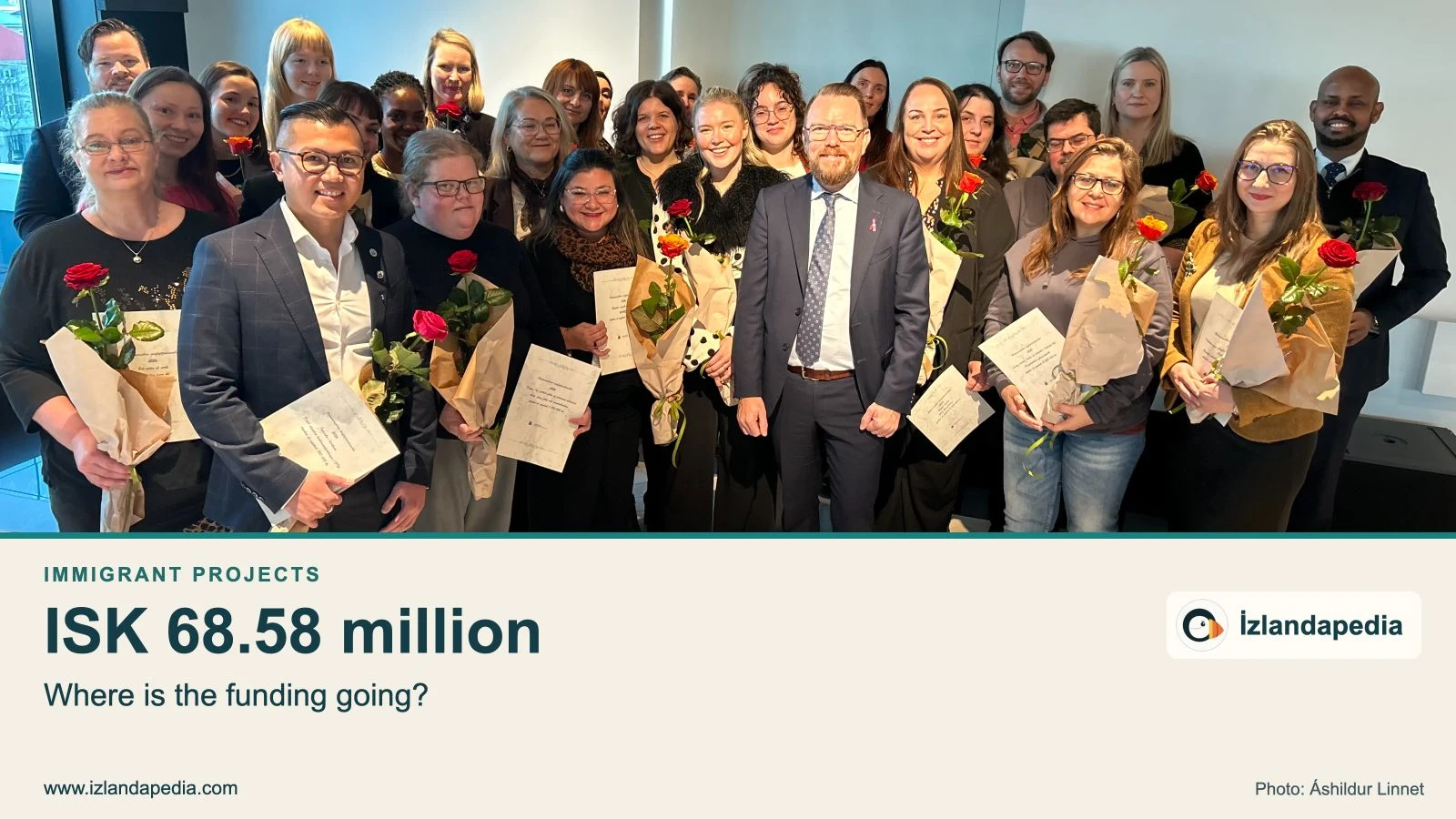
Twenty-six projects have been awarded ISK 68.58 million to support language learning, employment and participation in society. The grants will fund language learning, employment and inclusion initiatives.
Announcement: 11 November 2026 · Ministry reply: 18 November 2026
The ministry explains the awards
Iceland’s 2026 Development Fund for Immigrant Affairs (Þróunarsjóður innflytjendamála) supports work ranging from Icelandic practice at work and young people’s education choices to women’s social connections and responses to online hate speech. The awards were announced on 11 November. In a written statement dated 18 November, the Ministry of Social Affairs and Housing detailed what the projects are intended to do. [1] [2]
According to the ministry, 71 projects sought a combined ISK 242,013,624. The ISK 68,580,000 awarded represents approximately 28.3% of that total. This compares the overall sums, rather than the share funded for any individual project. [1]
Why did ISK 50 million become ISK 68.58 million?
The 2 July call for applications announced ISK 50 million. The ministry says the additional ISK 18.58 million came from unused grants carried over from earlier years, including projects cancelled during the COVID-19 pandemic. [1]
It points to Article 4 of Regulation 976/2024, which allows unpaid grants to be reallocated when the funded project is cancelled. The ministry therefore attributes the increase to these unused allocations. [1] [3]
Eleven projects bringing language practice into daily life
GETA Samtök — Æfum íslensku saman · 2,000,000 ISK.
The campaign aims to make everyday services more welcoming to Icelandic learners. It starts in Hafnarfjörður’s library, museums and municipal services, with cafés and shops also encouraged to join.
Kvennaskólinn í Reykjavík — Skapandi vinnustofur: Raddir, handverk og sjálfsmynd · 950,000 ISK.
Students on the school’s Icelandic programme will use the language beyond conventional lessons through creative workshops, collaborative problem-solving and conversation.
Mímir-símenntun ehf. — Íslenska til náms – sjálfsnámsbrú að B2 · 3,500,000 ISK.
A self-study Icelandic pathway will be developed, tested and evaluated for people aged 18–25 preparing for further education in Iceland.
Gefum íslensku séns, félag — Gefum íslensku séns – um allt land · 3,100,000 ISK.
The initiative, which began in the Westfjords, will expand to Akureyri. It creates a safe practice space for learners at every level and highlights the role of native Icelandic speakers.
VOX Rangárþing — Raddir saman · 2,000,000 ISK.
Immigrant choir members will practise Icelandic before rehearsals, working on the meaning and pronunciation of the lyrics they sing.
Deild erlendra hjúkrunarfræðinga í Félagi íslenskra hjúkrunarfræðinga — Íslenska í hjúkrun · 750,000 ISK.
Workshops, conversation practice, role-play and language partners will help foreign-born nurses build confidence and practical Icelandic communication skills at work.
Sprettur, Háskóli Íslands — Let’s keep speaking Icelandic · 4,500,000 ISK.
The project seeks to reduce automatic switches to English when speaking with Icelandic learners, giving them more opportunities to try the language.
Símenntun á Vesturlandi — Málsvari íslenskunnar · 4,500,000 ISK.
The initiative supports daily Icelandic use in West Iceland’s workplaces and institutions, from training and information-sharing to break-room conversations and social activities.
Samfélag fyrir Öll — Orð verða að verki / Voices in Motion · 2,000,000 ISK.
Art, theatre and storytelling will support everyday Icelandic practice, culminating in a performance. The initial announcement calls it “Voices in Motion”; the ministry’s reply uses “Orð verða að verki”.
Pappírsbátur félagasamtök — Lesum saman, lestur og íslenska í daglegu lífi · 3,000,000 ISK.
Shared reading and peer support for people aged 16–25 will combine language practice with opportunities to build social connections.
Samtök pólskra verkfræðinga á Íslandi — Icelandic over Coffee – Language, Work and Participation · 3,000,000 ISK.
Icelandic practice for people in the technical sector aims to help them use their professional knowledge and skills more fully at work.
Eight projects for women, young people and families
Samtök kvenna af erlendum uppruna á Íslandi — Raddir, tengsl og þátttaka · 5,000,000 ISK.
Story circles in Reykjavík and Egilsstaðir will bring women together, combining social contact, learning and language practice to reduce isolation, particularly among recent arrivals.
Vinafélag Pólska skólans í Reykjavík — Framtíð fyrir alla · 1,180,000 ISK.
Young people of immigrant background and their parents will receive guidance on upper-secondary options, credits, admission requirements and links between education and employment.
Stúdentaráð Háskóla Íslands — Iceland 101 – International Student Transition Programme · 3,000,000 ISK.
New international students at the University of Iceland will receive regular support, information and opportunities to build connections.
Átak, félag fólks með þroskahömlun — Dagur í lífi fatlaðs fólks af erlendum uppruna · 1,700,000 ISK.
The project will promote the visibility and social participation of immigrants with intellectual disabilities, including through videos published by Átak.
Najlaa Attaallah — Stitch & Saga: Threads of Memory, Belonging and Dialogue · 4,000,000 ISK.
Embroidery activities will bring women together in Reykjanesbær, Akranes and Akureyri, building social ties and providing space to practise Icelandic.
Mental Bytes — Who We Are · 1,100,000 ISK.
Recently arrived and local young people will work together in art workshops, ending with an exhibition at Reykjavík City Hall.
Félag fósturforeldra — Support for families fostering refugee children · 1,500,000 ISK.
Support groups and education for families fostering refugee children will strengthen the children’s social adjustment and connections in a new country.
Amtsbókasafnið á Akureyri — Mánuður móðurmáls · 400,000 ISK.
A month of activities around International Mother Language Day on 21 February will include exhibitions, storytelling, book exchanges, music and poetry.
Three projects addressing prejudice and hate speech
Austurbrú ses — Samleiðir – ungt fólk gegn hatursorðræðu og fordómum · 3,000,000 ISK.
Young people will examine hate speech, prejudice and misinformation online and in everyday interactions. Workshops will develop safe responses and educational material, with young participants deciding how it is communicated.
AMSIS — Orð skipta máli · 4,500,000 ISK.
Practical educational tools will help people recognise overt and less visible forms of online prejudice, understand their effects and respond.
Félag Sómala á Íslandi — Brúin – Samþætting, fræðsla og þátttaka · 4,500,000 ISK.
The project supports the Somali community’s language learning, education, employment and social participation, alongside digital literacy and safe responses to online discrimination and hate speech.
Four studies examining barriers to participation
Nichole Leigh Mosty — Fullorðinsfræðsla og innflytjendur · 1,400,000 ISK.
The research examines how adult education can strengthen the inclusion of immigrants working in preschools, including its response to shortages of qualified preschool teachers.
Hlöðver Skúli Hákonarson — Legal certainty and a good start · 2,500,000 ISK.
This Oxford doctoral study uses the experience of Venezuelan arrival cohorts to investigate whether early certainty about legal status affects how people settle in a new country.
Eva Sigrún Óskarsdóttir — Íslenska, félagsleg tengsl og þátttaka · 4,000,000 ISK.
The research investigates opportunities and barriers to daily Icelandic use and social connections among recent arrivals aged 16–25.
Félagsvísindasvið Háskóla Íslands — Menntaðar flóttakonur frá Miðausturlöndum · 1,500,000 ISK.
This part of a doctoral study explores educated refugee women from the Middle East, their experience of Icelandic at work and its role in professional opportunities.
Timetables will be set in individual contracts
The ministry says each recipient has a written agreement. Start and end dates may have shifted from the original application and will be specified in each contract. Its reply did not provide separate start and end dates for all 26 projects. [1]
These descriptions set out planned aims, not demonstrated outcomes. Award amounts come from the official 11 November list; project descriptions come from the ministry’s written statement. Some project titles have been shortened for readability, and the thematic grouping is our own. [1] [2]
Editor’s view — Özgür Akın
I see these grants as a valuable step towards strengthening the way we live together in Iceland. I particularly welcome projects that take Icelandic learning beyond the classroom and create opportunities to practise at work, through the arts and in everyday life. We all benefit when immigrants can share their knowledge and experience, express themselves and participate in society.
I also greatly value the projects tackling hate speech and prejudice. Concrete action was needed. But I believe these efforts must go beyond a handful of projects, and that Iceland should give greater attention to tackling hate speech. Everyone should be able to live safely, without being excluded because of their background or identity. This is fundamental to living together.
I hope these projects help build lasting connections and reach more people over time.