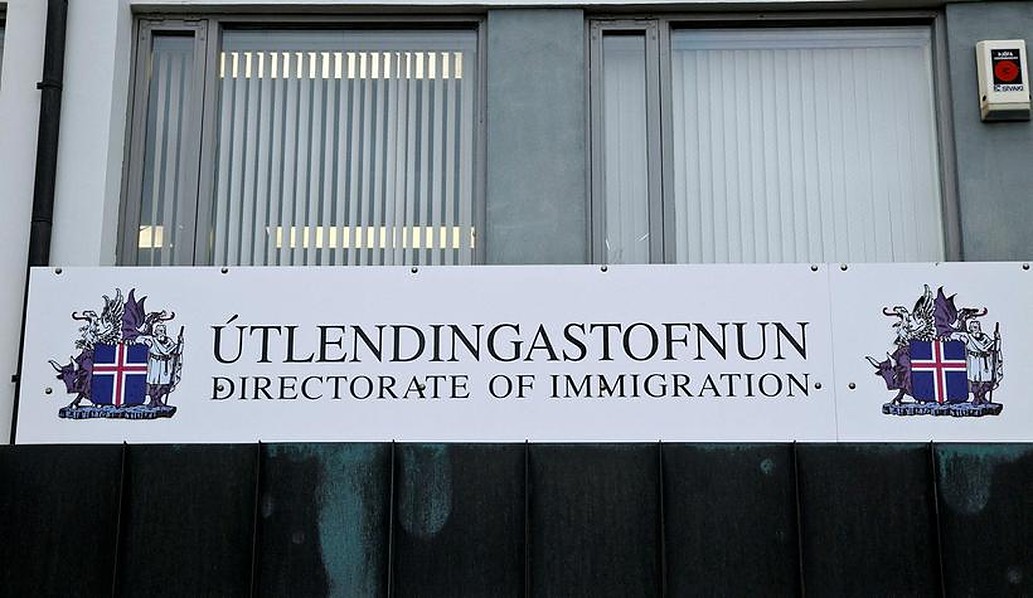
Justice Minister Þorbjörg Sigríður Gunnlaugsdóttir has opened consultation on a package that would increase penalties, expand investigative powers and make it easier to confiscate criminal proceeds. Defence lawyers warn of consequences for personal liberty and judicial safeguards. As of 5 September 2026, these are proposals, not enacted changes.
A wider response to organised crime
Published on 2 September, the package proposes amendments to the General Penal Code, the Criminal Procedure Act and the Police Act. The draft also amends legislation on extradition and other assistance in criminal matters. It forms part of the government’s Öruggara Ísland, or “Safer Iceland”, strategy.
The ministry argues that criminal groups increasingly operate across borders and exploit technology and complex financial arrangements. Drug offences, money laundering, human trafficking, cybercrime and serious violence are among the activities cited. Fréttatíminn reports a police assessment identifying about 20 active organised-crime groups, varying in size and structure, and growing concern about conflict, violence and weapons offences.
Maximum penalty would rise from four to eight years
The proposed maximum prison sentence for participation in organised criminal activity would rise from four to eight years. The package also seeks to allow heavier penalties where children or young people are exploited to commit offences, including for payment or other gain.
The definition of a criminal group would be broadened. It would cover an association or cooperation of three or more people, with a particular structure, directed towards committing an offence punishable by four years’ imprisonment, for profit or another shared purpose. The explanatory notes argue that a narrow interpretation of the existing definition can exclude loosely organised groups with a shared aim and division of labour.
Urgent measures before a court order
Where waiting for a court order would create an urgent risk of prejudicing an investigation, the draft would allow a prosecutor to authorise certain measures immediately. An application would have to reach the district court as soon as possible and within 48 hours of the measure starting. If the judge refused the application, the measure would have to stop and all information and material obtained through it would have to be deleted.
This does not mean that emergency searches of homes would become possible for the first time. Vísir corrected its initial report to explain that an urgent-search exception already exists. The debate concerns extending powers relating to other methods, such as interception.
Longer detention before charges and delayed disclosure
The package would increase the maximum period of detention on remand before charges are brought from 12 weeks to six months. The general period during which delivery of case documents to defence counsel may be deferred would rise from three to six weeks. The stated aim is to protect and complete complex investigations. Counsel would retain the ability to ask a judge to rule on a refusal or deferral of access.
The confiscation provisions would allow assets believed to derive from criminal conduct to be confiscated without a conviction for a specific offence. A court would make the decision, and the owner would have an opportunity to explain the assets’ origin. The stated purpose is to weaken the financial basis of criminal activity where proving individual offences is difficult.
Defence lawyers challenge the proposals
Speaking to Vísir on 4 September, Vilhjálmur Hans Vilhjálmsson stressed that wider powers would affect more than people proven to have committed crimes. Sveinn Andri Sveinsson highlighted the impact of detention, particularly isolation. Elimar Hauksson argued that the existing 12-week limit places necessary pressure on prosecutors to finish investigations, and that longer detention could affect people who are subsequently acquitted. These are the lawyers’ assessments of the draft.
The package has not entered into force. The penalties, time limits and powers described here remain proposals that may change during the legislative process.
Editor’s view
This section presents the editor’s personal opinion.
Editor’s view: Safeguards must be protected in the fight against crime
Having practised criminal law for many years in Türkiye, where comparable powers have been applied far more harshly, I want to begin with a fundamental point: the commitment to the rule of law of those applying a legal provision matters as much as its wording. Yet legal protection cannot be left to an individual’s conscience, training or discretion. The limits of a power, the conditions for its use and the means of reviewing it must be clearly set out in law. People’s freedom is genuinely protected only when those limits bind everyone.
As crime changes and criminal activity becomes more organised, new legislation may be needed to protect public peace. That need cannot be ignored. But the more serious the need, the more carefully the changes must be drafted.
Those who will put the legislation into practice must be consulted, and the concerns of defence lawyers must never be brushed aside. I say this sincerely, drawing on my professional experience: lawyers know at first hand where a legal system is weak, where it fails and how those failures affect people’s lives. They see the distance between the safeguards written into law and what happens in practice.
In genuinely urgent and exceptional circumstances, I consider it acceptable in principle to begin certain investigative measures before obtaining a court order. But the urgency must be supported by specific reasons, the power must have clear limits, and the measure must promptly undergo independent judicial review. I believe such an exception can be reconciled with legal safeguards where oversight works effectively. Oversight that exists only on paper is not enough.
By contrast, I do not consider extending the pre-charge detention limit from 12 weeks to six months reasonable or acceptable. Continued judicial review of necessity and proportionality is an important safeguard, but the proposed period is still far too long in my view. Every day that someone whose guilt has not been established is deprived of liberty has serious consequences for that person and their family.
I also believe that a longer limit would reduce the pressure on prosecutors to complete investigations and bring charges promptly. That can have a dangerous consequence: a system that should encourage timely investigation may instead make the detained person bear the cost of delay. Detention must not become punishment in advance of a verdict.
Nor can I reconcile extending the general deferral period for supplying case documents to defence counsel from three to six weeks with a democratic understanding of the rule of law. The ability to challenge a restriction before a judge is valuable, but it cannot replace timely access to information. Delayed access for the defence, combined with longer detention, makes the imbalance all the more pronounced.
The balance between tackling organised crime and protecting defence rights must be preserved. Public peace endures when everyone can live under the protection of the law. The success of this legislation should therefore be judged both by the tools it provides against crime and by how well it protects liberty and the right to a defence.