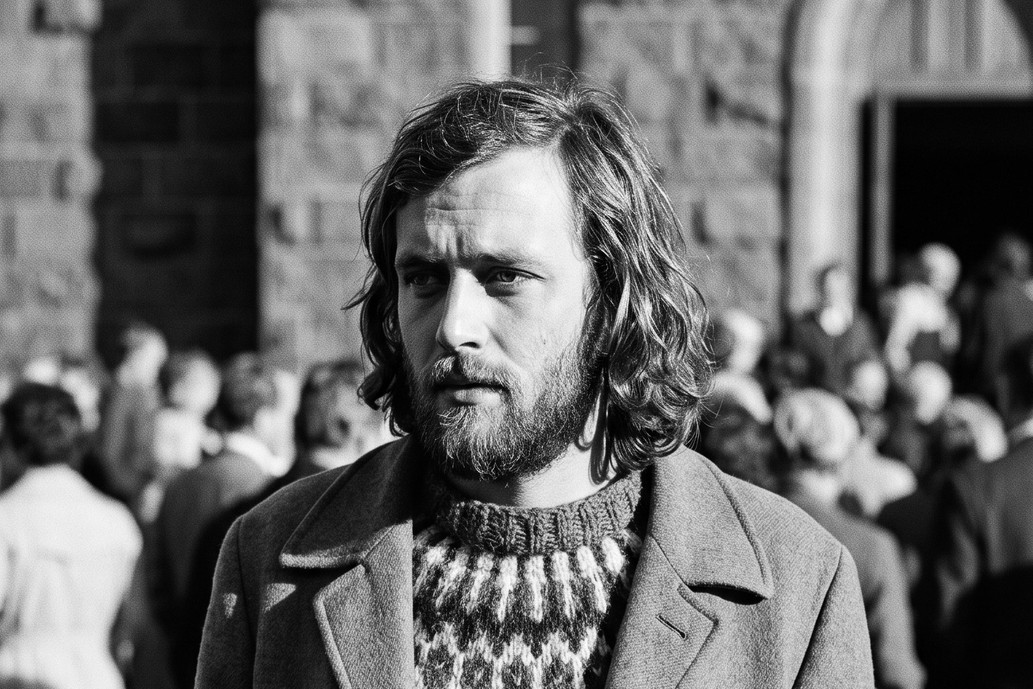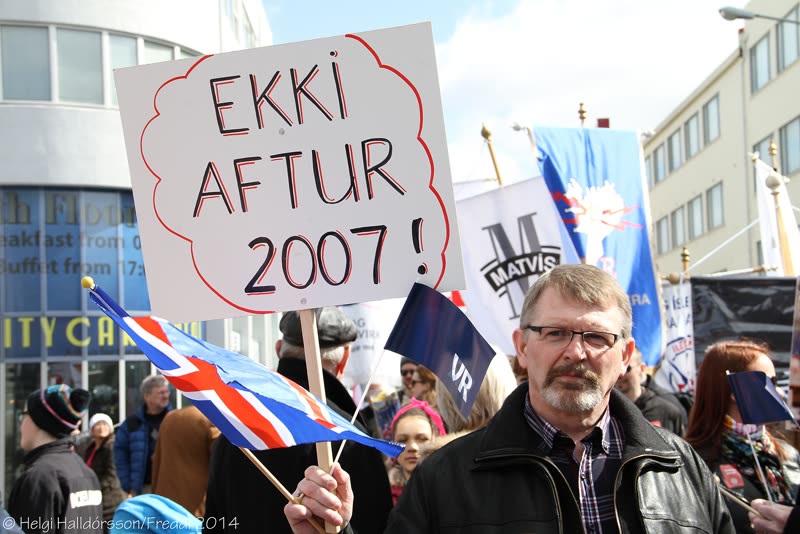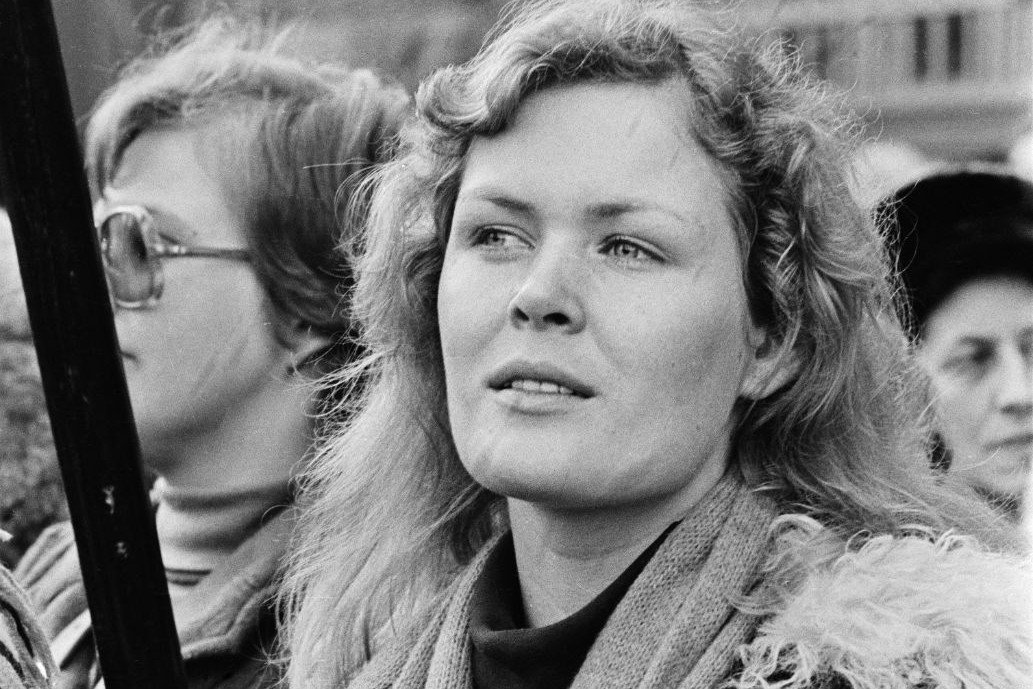
24 October is the most important day in Iceland's women's movement. On that date in 1975, about 90 per cent of the country's women stopped paid work, housework and childcare all at once. Factories, schools, banks and telephone exchanges closed or barely functioned. The day went down in history as Kvennafrídagurinn, the Women's Day Off. This year, 24 October also falls on the day winter begins in the old Icelandic calendar.
What drove women to act?
In 1970s Iceland, women worked both at their jobs and at home, but their labour showed up neither in their pay nor in politics:
- The pay gap: Women who worked outside the home earned less than 60 per cent of what men earned. Jobs dominated by women, such as fish processing, were among the lowest paid.
- Invisible work: About half of working-age women had jobs outside the home, yet almost all housework and childcare still fell to them, unpaid and unrecognised.
- Absent from politics: After the 1974 election, only 3 of the 60 members of parliament (Alþingi) were women: 5 per cent. Women had won the vote in 1915, but only a handful had ever sat in parliament.
- A global moment: The United Nations had declared 1975 International Women's Year, and 24 October was also UN Day.
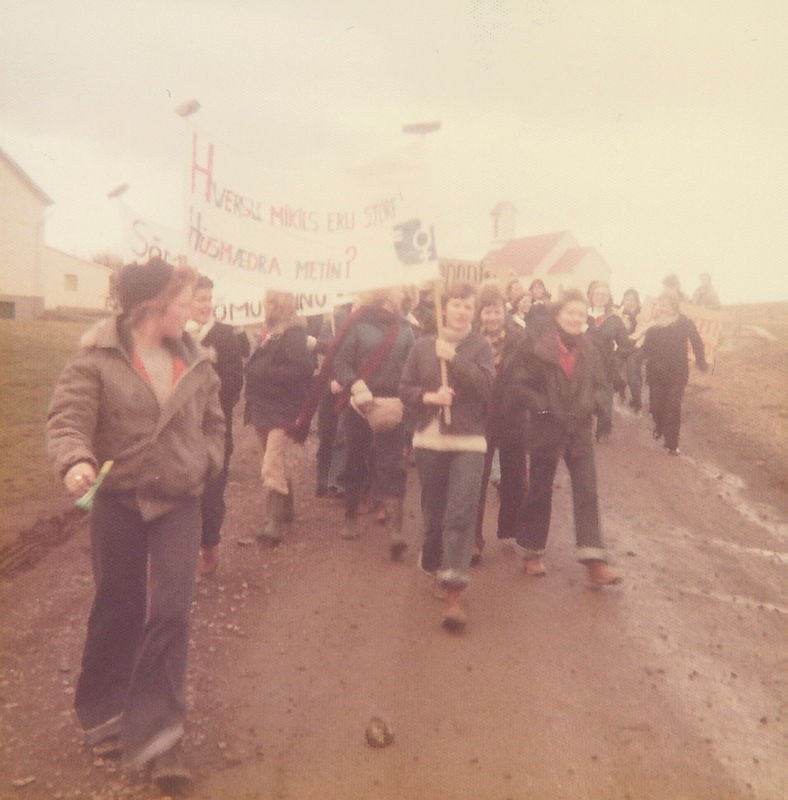
The idea of a strike came from the radical Redstockings movement (Rauðsokkahreyfingin). Women's associations and unions from across the political spectrum eventually joined forces. But the word “strike” put many women off, since strikers could be fired. So the action was called a “day off”: an employer could punish a striker, but it was much harder to punish someone for taking a day off. That small change of name brought in almost every woman in the country, whatever her politics.
“The Long Friday”: when the country stopped
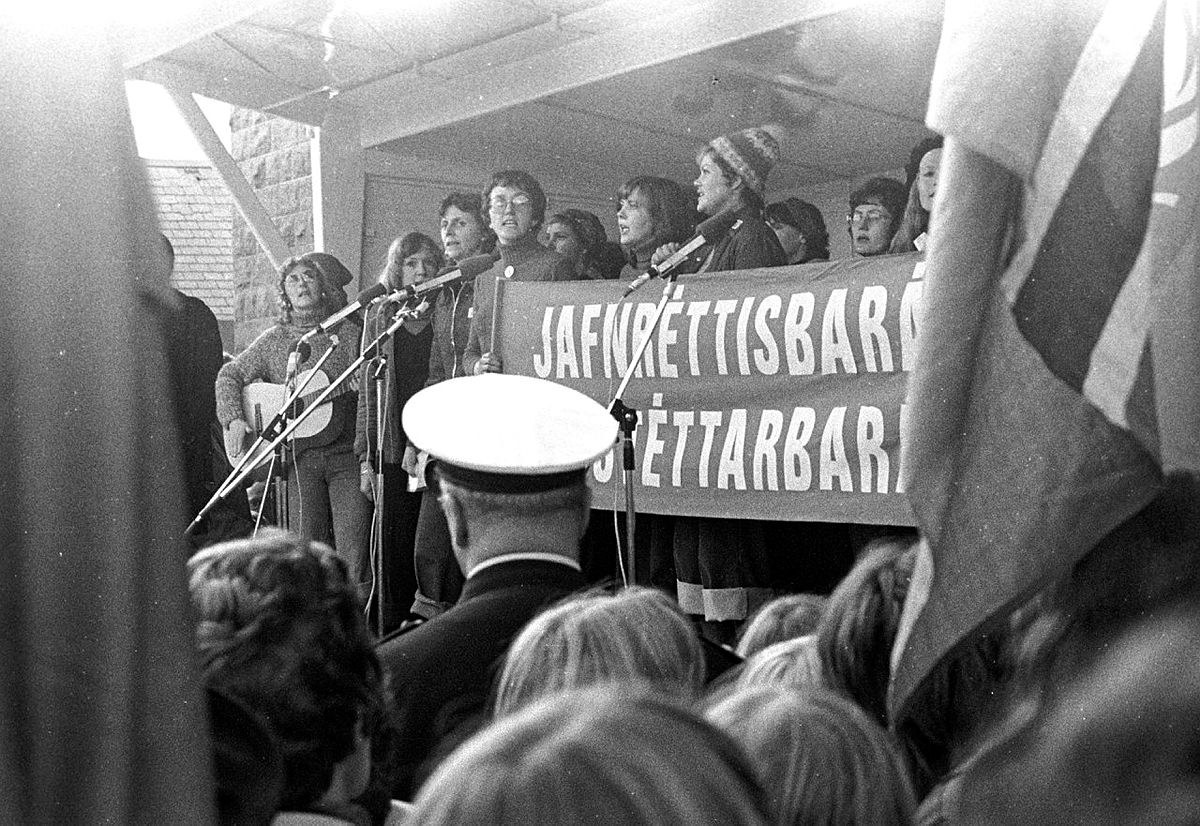
24 October 1975 was a Friday. About 25,000 people gathered at Lækjartorg square in central Reykjavík, in a country of only around 220,000. Rallies were held across Iceland. The speakers included a housewife, two women MPs, a representative of the women's movement and a worker who spoke for the lowest-paid women.
Men had to take over what women left behind. Fathers brought their children to work, where offices handed out sweets, pencils and paper. Sausages, quick to cook, sold out in many shops. For years afterwards, Icelanders called it “the long Friday”.
What changed afterwards?
- 1976: Parliament passed the first Gender Equality Act, banning discrimination on the basis of sex.
- 1980: Vigdís Finnbogadóttir became the world's first woman to be democratically elected head of state. Many historians say 1975 paved the way.
- A tradition was born: Women walked out again in 1985, 2005, 2010, 2016, 2018, 2023 and 2025. In 2005 they left work at 14:08, the point in the working day after which, compared with men's pay, women were effectively working for free.
- 2023: Under the slogan „Kallarðu þetta jafnrétti?“ (“Do you call this equality?”), it was the first full-day strike since 1975. Police estimated that close to 100,000 people gathered on Arnarhóll hill in Reykjavík. Then-Prime Minister Katrín Jakobsdóttir also stopped work. This time non-binary people (kvár) joined the call too.
- 2025: On the 50th anniversary, tens of thousands filled central Reykjavík again. Their demands fell under three headings: the undervaluing of women's work, unpaid care work and gender-based violence.
Being a woman in Iceland in 2026
Iceland is the country the world thinks of first when it comes to equality. In the World Economic Forum's Global Gender Gap Report, published in September 2026, Iceland ranks first for the 17th year in a row, having closed 93 per cent of its gender gap.
What has been won
- Politics: In the 2024 election, 29 of the 63 MPs elected were women (46 per cent), up from 5 per cent in 1975.
- The top of the state: President Halla Tómasdóttir, Prime Minister Kristrún Frostadóttir and Foreign Minister Þorgerður Katrín Gunnarsdóttir are all women, and so is the Bishop of Iceland.
- A new law: Under Act No. 53/2026, in force since 1 September 2026, employers with 50 or more staff must carry out a gender pay analysis every three years and report it to the Directorate of Equality (Jafnréttisstofa). If they find an unjustified gap, they must draw up a time-bound plan to close it. The first reports are due by 1 March 2027.
What still needs to change
- The pay gap has not closed: According to Statistics Iceland (Hagstofa), the unadjusted gender pay gap was 10.4 per cent in 2024, up from 9.3 per cent the year before. It was 15.2 per cent in the private sector and 4.0 per cent in local government.
- An even wider income gap: According to the committee behind the 2025 strike, women's employment income is about 21 per cent lower than men's. The main reasons are the low pay of female-dominated jobs such as care, cleaning and teaching, and the fact that women more often work part time.
- Violence: According to the women's movement, about 40 per cent of women in Iceland experience gender-based violence in their lifetime. In 2024, three women and two girls were killed, the highest number in 25 years according to police data.
- Immigrant women: Women of foreign origin on average work longer and more irregular hours and earn less. One reason the 2023 strike lasted a full day was to make it easier for immigrant and low-income women paid by the hour to take part.
If you are a woman working in Iceland
- You are entitled to equal pay: In Iceland, it is illegal to pay people differently by gender for the same work or work of equal value (Gender Equality Act No. 150/2020). This applies to foreign workers too.
- Ask your union: If you have doubts about your pay or working conditions, your union (for example VR or Efling) can advise you free of charge.
- You are not alone in the face of violence: In an emergency, call 112. The women's shelter Kvennaathvarfið offers support around the clock.
The same day: the first day of winter
This year, 24 October is a Saturday, and in the old Icelandic calendar it is also the first day of winter (fyrsti vetrardagur). The old calendar divided the year into just two seasons, summer and winter, and winter always begins on the Saturday between 21 and 27 October. It once marked the start of gormánuður, the slaughtering month, when farms feasted while fresh meat was plentiful. Folklore says that a frosty first day of winter means a mild winter ahead, and a warm one a harsh winter.
As far as we could find, no new nationwide strike has been called for 2026. But 24 October remains the day each year when Iceland remembers what its women fought for.
Sources
- Kvennasögusafn Íslands — Kvennafrídagurinn 24. október 1975
- Wikipedia — 1975 Icelandic women's strike
- Library of Congress, 2022 — Kvennafrídagurinn: The Day Icelandic Women Went on Strike
- Alþingi — Kjörnar konur á Alþingi
- BSRB, 2023 — Heimssögulegt kvennaverkfall
- Iceland Review — In Focus: The 2023 Women's Strike
- Vísir, 2025 — Boða aftur til kvennaverkfalls fimmtíu árum eftir það fyrsta
- Ms. Magazine, 2025 — They Dare, They Can, They Will
- Hagstofa Íslands, 11.9.2025 — Unadjusted gender pay gap 2024
- World Economic Forum — Global Gender Gap Report 2026
- Stjórnartíðindi — Lög nr. 53/2026 (breyting á lögum nr. 150/2020)
- Reykjavík Grapevine, 27.11.2024 — Femicides in a single year never higher
- Reykjavík Grapevine, 15.10.2025 — Now & Then: The Women's Strike 50 Years Ago
- Icelandic Roots — First Day of Winter (Fyrsti vetrardagur)
Spotted a mistake? info@izlandapedia.com · Instagram @izlandapedia