1. What is on the table: two files in brief
File 1 — Bill 97. A bill from Justice Minister Þorbjörg Sigríður Gunnlaugsdóttir. It amends Article 44 of the Foreign Nationals Act, the clause that governs temporary protection for people who fled Ukraine. In the Committee on Justice and Education since 21 September. Ten organisations and individuals sent submissions.
File 2 — Action Plan 102. The 2026–2029 Immigrant Action Plan from Social Affairs and Housing Minister Ragnar Þór Ingólfsson. The law obliges the government to adopt such a plan every four years; the previous one expired in 2025. In the Welfare Committee since 22 September. Fifteen bodies sent submissions; the ministry sent a six-page reply on 26 October.
Both were tabled last spring, ran out of time and were resubmitted in September. Both now await a committee report and a second reading.
2. File 1: what Ukrainians have today and what happens tomorrow
Today. Since March 2022 people fleeing Ukraine have received "temporary protection" as a group, without individual asylum applications. It can last at most five years. Under the law, when the period ends a person can get a residence permit on humanitarian grounds; after a year with that permit they can apply for permanent residence. In other words, today's law contains a bridge from temporary protection to permanent residence. The five years run out in March 2027.
If the bill passes. Four things change:
- The maximum period rises from five to six years. On 30 July the European Union extended its own temporary protection to 4 March 2028; Iceland wants to be able to follow.
- The bridge is removed: the clause allowing a humanitarian permit after protection, and permanent residence after that, is deleted. The law will state explicitly that this permit "cannot be the basis for permanent residence".
- The minister can set the details, scope and exceptions by regulation, that is, without going back to Alþingi.
- The Refugee Committee moves from the Ministry of Social Affairs to the Ministry of Justice and is reconstituted.
So what do Ukrainians do when the period ends? According to the ministry, they apply for residence under the general rules like everyone else: through work, study or family ties. The ministry writes that nobody will be deported automatically and that the ban on returning people to a country at war applies. The government's reasoning, in short: temporary protection is an emergency tool; the aim is for people to return when the war ends; what comes next should be decided together with Europe and the Ukrainian government, not by Iceland alone.
3. What the critics say
The UN Refugee Agency (UNHCR): If people with refugee status can reach permanent residence, why not people who fled the same war under temporary protection? The distinction is unjustified and problematic under the non-discrimination clause of the European Convention on Human Rights. By the agency's estimate, even if the war ends, more than half of the Ukrainians in Europe will still be in their host countries in 2029; without a bridge, thousands will file asylum applications and the system will clog.
The unions (ASÍ) and the asylum lawyers (FTA): Saying "let them get residence through work" is easy; but a work permit requires specialist skills or a labour shortage, and years in the same job are not enough on their own. Both point to the model Norway proposed in September: Ukrainians who are already working and have had regular income over the last twelve months move to a work permit without a labour-market test, and can get permanent residence after three years. ASÍ adds that uncertainty increases the risk of informal work and exploitation. FTA also objects to the timeline: in 2022 the bridge was set at three years, in 2024 it became five, now six, and the bridge disappears altogether. "The rule changed every time the deadline approached."
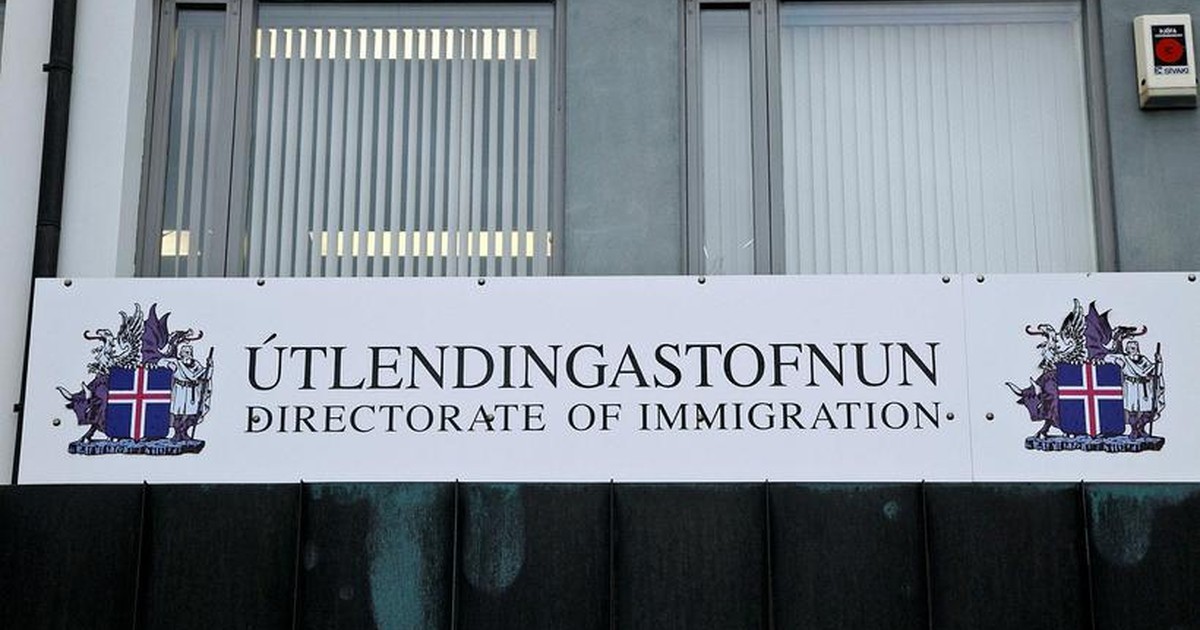
The Directorate of Immigration (Útlendingastofnun): Supports the bill but warns. When the period ends the agency must notify each person that their asylum application will be examined only if they ask; "most would probably ask", and then more than 6,000 files would be examined one by one. The agency is already overloaded and asks for extra resources.
The Red Cross: Norway, the Netherlands, Estonia, Latvia and Poland are each building their own transition route; there is no "uniform European practice", and Iceland is using that excuse to pick the most restrictive path.
Ukrainians themselves: The February pre-consultation drew 276 submissions, most from Ukrainians living in Iceland and almost all against removing the bridge. Tetiana Khismatulina, who wrote to the committee in her own name, has been here since 2022; she works in a primary school, studies at university, and her registered address is in Donetsk. "We are not asking for automatic permanent residence for everyone," she says. "We are ready to work, learn the language and support ourselves. We only want a goal we can reach."
The ministry's answer: None of these submissions gives reason to change the bill.
4. File 2: what the action plan promises you
The plan contains 24 measures under five headings, each with a cost. Multiplying the annual items by four years and adding up gives 4.03 billion krónur, about 1 billion a year. The ones that matter:
Icelandic (more than half the money).
- Icelandic and civic courses for refugees: 321 million a year. Today a refugee gets on average two courses, 80 lesson hours. Finland guarantees 2,100 hours. According to the OECD, only 18 per cent of immigrants in Iceland think their Icelandic is adequate; the OECD average is 60.
- Icelandic tuition for everyone, everywhere in the country, "where cost is not a barrier": 180 million a year.
- An official level test: on the European framework (A1–C2), coordinated by the University of Iceland, nationwide. A certificate useful for job applications and, in future, for citizenship requirements.
- Special courses for shift workers and parents without childcare; Icelandic in schools for parents of preschool and primary pupils.
- A two-year campaign starting in 2026: "Icelandic as the first choice in Iceland", asking native speakers to be patient with learners.
Work and diplomas.
- A single application door for recognising foreign diplomas.
- Skills validation (raunfærnimat) documenting work experience for those with short schooling.
- Public-sector job ads will state which level (for example B1) is required instead of vague phrases like "good Icelandic".
Information and participation.
- A multilingual "I moved to Iceland" page for newcomers on Ísland.is.
- Vinnumálastofnun's civic-education material "Landneminn" remade as short video modules, translated into the main immigrant languages.
- A letter from the National Electoral Commission to every immigrant who gains the right to vote: "you can now vote".
Children and vulnerable groups.
- A programme to bring immigrant children into sports and youth clubs: 130 million a year.
- Group-based psychological support for refugees and access to treatment for post-traumatic stress disorder.
- Stronger child-protection services for unaccompanied minors.
- Proper statistics on immigrants: today even basic numbers cannot be produced because state databases cannot be linked.
5. What the ministry said yesterday: accepted, rejected, unclear
The reply memo to the fifteen submissions went to the committee on 26 October. In summary:
Rejected.
- The call for "a long-term strategy first" (ASÍ, Red Cross, Human Rights Institute): the 2024 White Paper contained a draft strategy to 2038, but it never reached Alþingi. The ministry says the plan already grew out of that work and added no strategy measure.
- Free legal advice for immigrants: the Icelandic Human Rights Centre used to provide it; the centre closed, its funding went to the new Human Rights Institute, which does not count individual advice as its job. The ministry asks whether "special advice for one group" is warranted; it is considering it only for victims of violence.
- A right to interpretation: outside the plan because it would require a change in the law.
Unclear.
- Writing the right to learn Icelandic into law: it was in the February draft and was dropped from the final text. ASÍ wants it back. The memo does not address it.
- Compulsory Icelandic for refugees (requested by the Red Cross and others): no such obligation exists today, but the ministry is "examining how it could be implemented" and begins talks with municipalities this week. It may come onto the agenda in the coming months.
- Money: the plan lists 321 million a year for refugees' language tuition; the 2027 budget bill contains a temporary 200 million. The ministry admits this buys two free courses per person, 80 hours, and that a course usually costs 50,000 krónur. How the gap will be closed is not in the memo.
Accepted.
- The draft plan was put out to consultation only in Icelandic. The ministry agreed to translate the text into English and easy-read Icelandic once Alþingi approves it.
- Information services will pay particular attention to disabled people and those who cannot read; civic-education material will also be made available in Icelandic Sign Language.
6. What changes for you
If you are a Turkish citizen. File 1 does not affect you directly; the rules for work, family and student permits stay the same. But there is a signal: the government does not want a temporary status to turn into a permanent one by itself, and it prefers to set the details by regulation. That is the general line of the Ministry of Justice, which writes the residence rules for everyone from outside the EU. File 2 is directly for you: cheap Icelandic courses, language tuition at work, an official level certificate, diploma recognition, clear requirements in public job ads, multilingual official information, a reminder when you gain the right to vote.
If you are Ukrainian. Protection will most likely continue until 2028. What changes is what happens when it ends: the humanitarian-permit bridge goes; you will need to apply through work, study or family ties. A solution like the Norwegian model is being discussed in committee but is not in the bill.
For everyone. The money in the action plan is not guaranteed; it depends on each year's budget. The first test is the temporary 200 million for refugees' language tuition in the 2027 budget.
7. What happens next
Both files are in committee. The committees will write reports, then come second reading and a vote. Bill 97 has to become law before March 2027; otherwise today's bridge starts to operate. The action plan's timetable is looser. Written submissions can still be sent to the committees through the "Vilt þú senda umsögn?" link on each case page, in Icelandic or English. İzlandapedia will keep following both files.
Frequently asked questions
Does bill 97 affect Turkish citizens?
Not directly. The bill only amends the temporary-protection clause that applies to people who fled Ukraine. The rules for work, family-reunification and student permits stay the same.
Will Ukrainians be deported in March 2027?
No. If the bill passes, protection can be extended to 2028; the ministry writes that nobody will be sent back automatically. What changes is that the special route from humanitarian permit to permanent residence closes when protection ends.
Is the money in the action plan guaranteed?
No. The plan states a cost for each measure, but spending depends on each year's budget act. The 2027 budget contains a temporary 200 million krónur for refugees' language tuition instead of the 321 million the plan lists.
When will the Icelandic level test start?
The plan covers 2026–2029; there is no fixed date. The University of Iceland will coordinate the test, which will certify levels on the European framework (A1–C2).
How can I submit my views?
The "Vilt þú senda umsögn?" link on each case page at Alþingi can be used while the case is in committee. Submissions may be sent in Icelandic or English.
Sources
- Alþingi – Þingskjal 97, 97. mál, 158. löggjafarþing: Frumvarp til laga um breytingu á lögum um útlendinga, nr. 80/2016 (tímabundin vernd vegna fjöldaflótta o.fl.), dómsmálaráðherra, 16.9.2026
- Alþingi – Ferill 97. máls (staða, nefnd, erindi)
- Alþingi – Erindi í 97. máli: umsagnir UNHCR (dbnr. 321), ASÍ (334), Útlendingastofnunar (348), Rauða krossins (352), Amnesty International (353), Tetiana Khismatulina (354), FTA (364), Vladyslav Maliuta (327), Barnaheilla og UNICEF (346)
- UNHCR Representation for the Nordic and Baltic Countries – Observations on the draft law on amendments to the Foreign Nationals Act (temporary protection), 7.10.2026
- Útlendingastofnun – Umsögn um 97. mál, 8.10.2026 (rúmlega 6.000 Úkraínubúar)
- Alþýðusamband Íslands – Umsögn um 97. mál, 8.10.2026 (norska leiðin)
- FTA, félag talsmanna umsækjenda um alþjóðlega vernd – Umsögn um 97. mál, 8.10.2026
- Rauði krossinn á Íslandi – Umsögn um 97. mál, 8.10.2026
- Alþingi – Þingskjal 102, 102. mál, 158. löggjafarþing: Tillaga til þingsályktunar um framkvæmdaáætlun í málefnum innflytjenda fyrir árin 2026–2029, félags- og húsnæðismálaráðherra, 17.9.2026
- Alþingi – Ferill 102. máls (staða, nefnd, erindi)
- Alþingi – Erindi í 102. máli: umsagnir ASÍ (297), Mannréttindastofnunar (317), Rauða krossins (292), ÖBÍ (284), Mímis (290), SVÞ/VR (304), BSRB (278), Þroskahjálpar (212), Barnaheilla (227) o.fl.
- Félags- og húsnæðismálaráðuneytið – Minnisblað til velferðarnefndar um umsagnir við 102. mál, 26.10.2026 (dbnr. 537)
- Council of the European Union – Council Implementing Decision (EU) 2026/1912 of 30 July 2026 extending the temporary protection introduced by Implementing Decision (EU) 2022/382
- OECD (2024) – Skills and Labour Market Integration of Immigrants and their Children in Iceland
- UNHCR (May 2026) – Transitioning From Temporary Protection: Projected Stay, Legal Pathways, and Policy Options for Refugees from Ukraine
- Lög um útlendinga nr. 80/2016 (44. gr., 74. gr., 78. gr.)
- Lög um málefni innflytjenda nr. 116/2012 (7. gr.)
- Fotoğraf / Photo / Ljósmynd: Alþingishúsið, júlí 2012 – Zinneke, Wikimedia Commons, CC BY-SA 3.0. Tasarım / Design / Hönnun: İzlandapedia
Spotted a mistake? info@izlandapedia.com · Instagram @izlandapedia