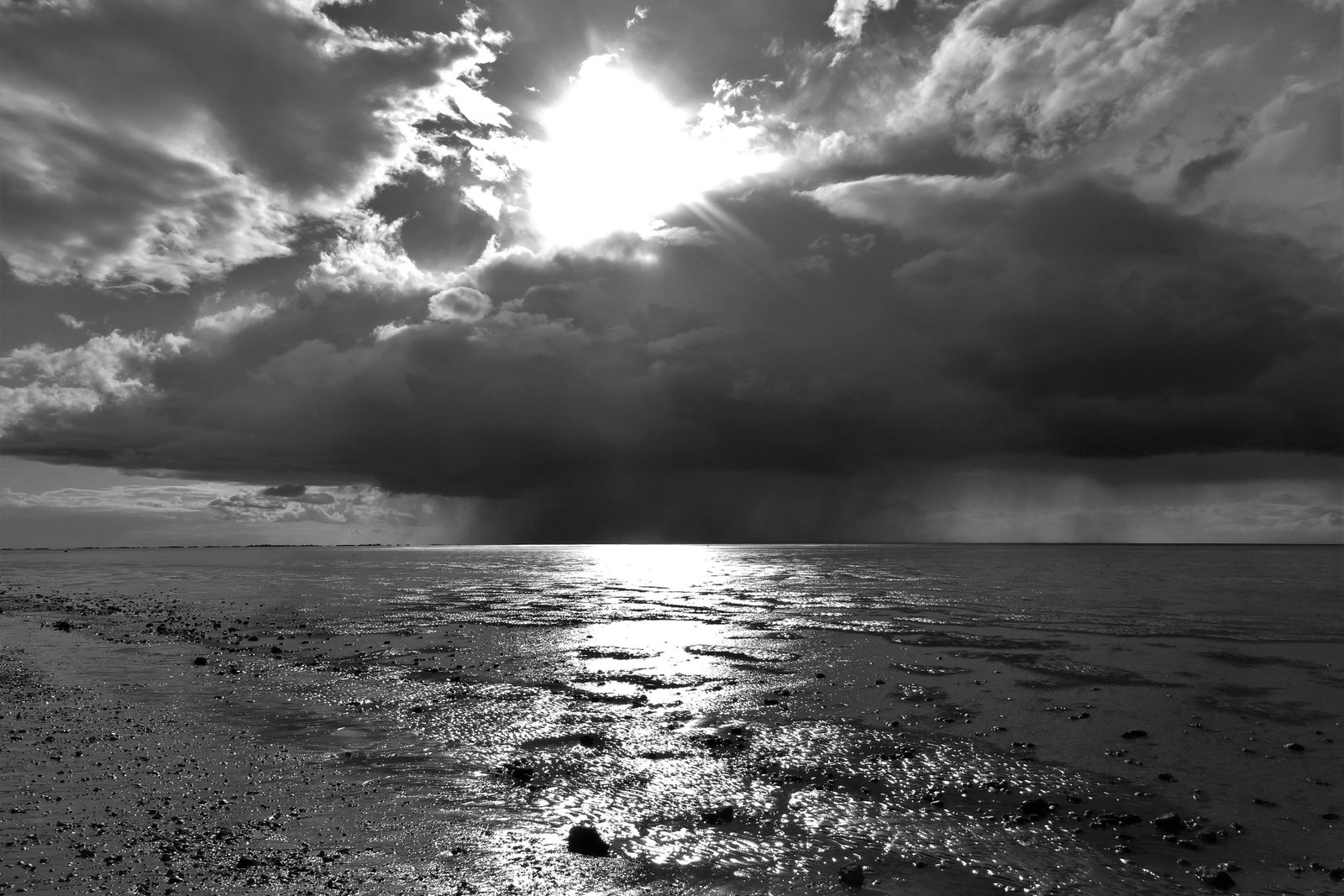
The study, by scientists from the British Geological Survey (BGS) and the University of Oslo, was published in GSA Bulletin. They call the system the Wash Igneous Complex. Nothing of it can be seen at the surface: the rock samples came from two boreholes in Norfolk and Lincolnshire, 65 kilometres apart, at depths of 720 to 1,430 metres.
The lead author, BGS geophysicist Tim Pharaoh, says the find is “reshaping our understanding of England’s deep geological past”.
Crystals that keep time
The team dated the volcano using microscopic zircon crystals in the rock. When zircon crystallises from magma it traps uranium, which slowly decays into lead at a known rate. Measuring the ratio put the eruption at about 454.4 million years ago, in the Ordovician period.
That age matches, within measurement uncertainty, the age of the Kinnekulle ash layer, named after a hill in Sweden. The layer covers at least 690,000 square kilometres, from Oslo to Belarus, and is about 130 centimetres thick in a railway cutting in Oslo. The chemistry of the crystals in both places also matches, the researchers say.
Jenni Barclay, a volcanologist at the University of Bristol who was not involved in the study, says the match in both age and composition makes scientists “more certain these pieces are from the same eruption”.
Not a cone, but a field of calderas
This was not a cone-shaped mountain. According to the researchers, it was a system of collapsed craters, or calderas, spread over tens of kilometres above a large body of magma. At the time, an ocean separated England from Scandinavia, and volcanoes lined a belt running from today’s Lake District towards Belgium.
The eruption or eruptions that laid down the Kinnekulle layer are estimated to have thrown out at least 972 cubic kilometres of material, measured as solid rock. For comparison, Iceland’s Laki eruption of 1783, one of the largest lava eruptions in recorded history, produced about 15 cubic kilometres of lava.
Supervolcano or not?
Some outlets called it a “supervolcano”, but several volcanologists not involved in the research object to the term. Michael Poland of the US Geological Survey says the volume is very difficult to calculate because the ash deposits are poorly preserved. Peter Rowley of the University of Bristol says scientists would call it an ultraplinian eruption.
The researchers themselves are cautious: the title of their paper describes The Wash as a “candidate” source of the Kinnekulle ash, not a confirmed one.
Sources
- Pharaoh, T. C. et al. (2026) — The Wash Igneous Complex of eastern England: a candidate Avalonian source for Sandbian tephra in Baltoscandia. GSA Bulletin 138
- British Geological Survey — Secrets of an ancient supervolcano uncovered (28.08.2026)
- BBC Science Focus — Experts just found an enormous volcano lurking under England (11.09.2026)
- Live Science — An ancient 'supervolcano' has been found hiding beneath eastern England (03.09.2026)
- Thordarson, T. & Self, S. (1993) — The Laki (Skaftár Fires) and Grímsvötn eruptions in 1783–1785. Bulletin of Volcanology 55
- Fotoğraf / Photo / Mynd: Neil Theasby, Geograph / Wikimedia Commons, CC BY-SA 2.0 (kapak)
Spotted a mistake? info@izlandapedia.com · Instagram @izlandapedia