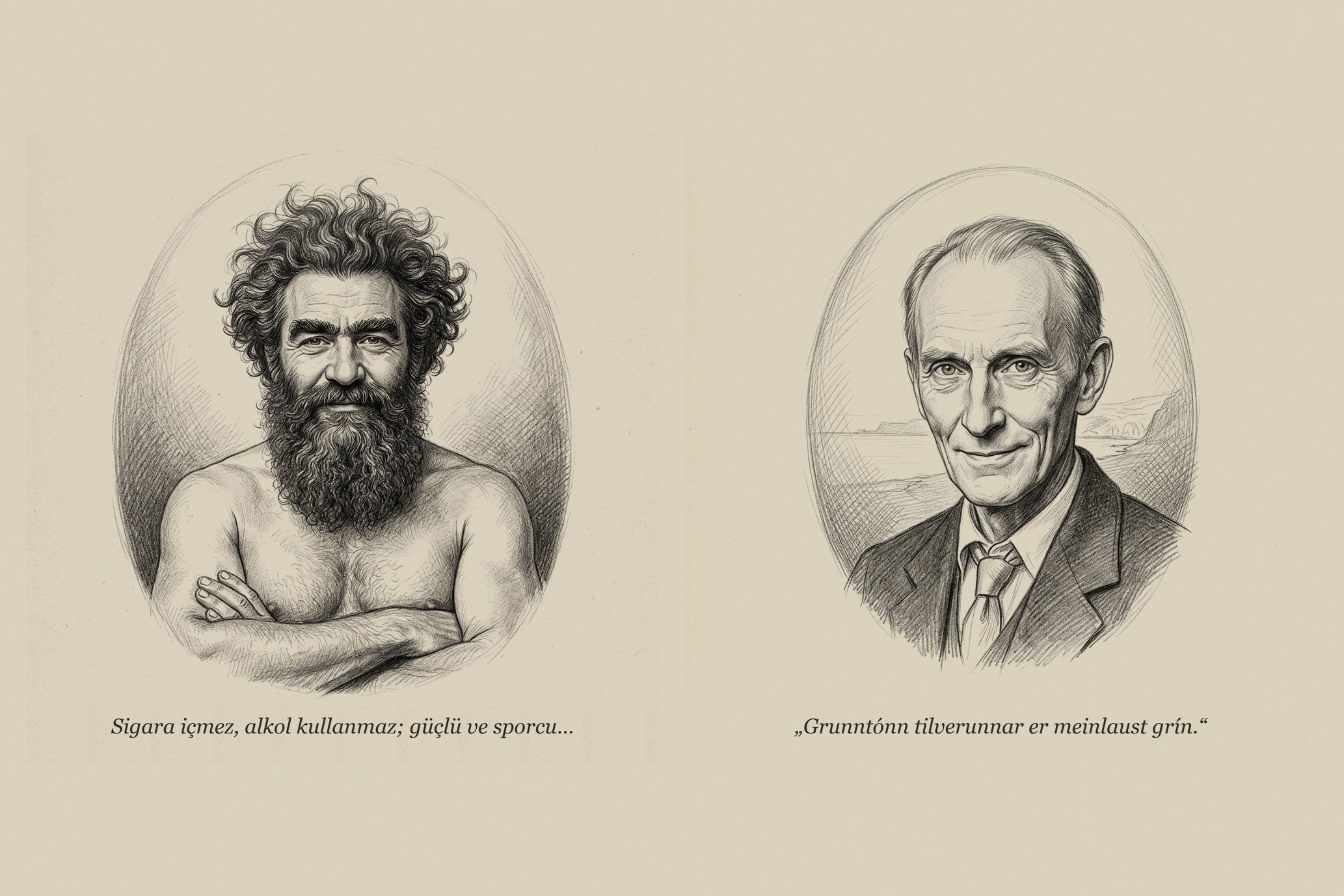
A strong system can still run out of capacity
Healthcare matters deeply to Icelandic voters. A Gallup poll reported before the 2024 election found that 69% placed it among their five most important issues. The question I want to raise is practical: should Iceland look beyond its usual European partners, including towards Türkiye, when searching for additional capacity?
Iceland’s problem is not simply a lack of spending. The OECD’s 2025 country note shows health spending per person above its average, life expectancy of 82.4 years—against an OECD average of 81.1—and a high number of nurses. Those strengths can coexist with shortages in particular specialties and delays for particular operations.
In its April 2024 update, the Directorate of Health said too many patients were waiting beyond its acceptable-wait criteria in all but three categories of selected surgery. Its benchmark was that 80% should receive surgery within 90 days; urgent cases were assessed differently. That report used data collected in January 2024 and procedures carried out in 2023, so it should not be read as a snapshot of every waiting list today.
Reporting on specialist recruitment also points to an ageing workforce and the difficulty of bringing qualified foreign doctors into an Icelandic-speaking clinical environment. For the patient waiting for a hip replacement, national averages offer little comfort. The immediate need is a team with the right expertise—and the time to provide care.
What Türkiye could bring to the table
- 24% → 85%Insurance coverage among the poorest tenthHistorical change, 2003–2011; World Bank’s 2018 reform assessment.Source ↗
- 53 → 15Infant deaths per 1,000 live birthsHistorical change, 1993–2013; World Bank’s 2018 reform assessment.Source ↗
- Almost +6 yearsTürkiye’s gain in life expectancy71.9 to 77.7 years, 2002–2014; World Bank’s 2018 reform assessment.Source ↗
- 1.4 millionHealthcare visitors to Türkiye in 2025USHAŞ reports 1,398,580 visitors and approximately US$3.02 billion in revenue, citing TÜİK. Volume is not a hospital quality rating.Source ↗
Türkiye’s Health Transformation Programme, launched in 2003, changed access to healthcare on a large scale. The World Bank describes its reforms—including family medicine and the expansion of health insurance—as a useful experience for other countries. These were substantial achievements, even though the system still faces serious pressures.
The reform-era figures above need their dates: they describe changes over different periods, rather than today’s results. The World Bank also reported a 47% reduction in out-of-pocket health spending between 1999 and 2012. They help explain why Türkiye’s experience deserves attention, without removing the need to examine its present-day limits.
Family medicine spread across the country. Digital services such as e-Nabız and MHRS moved appointments, test results and other routine tasks onto phones and computers. A country serving a large population has accumulated experience in organising high-volume care that a small health system might find valuable.
Türkiye also attracts international patients. USHAŞ, citing TÜİK, reports about 1.4 million healthcare visitors and roughly US$3.02 billion in revenue for 2025. Those totals show the scale of the sector. They do not prove that every provider offers the same quality, or that a procedure will be suitable for a particular Icelandic patient.
There is expertise behind the headlines
Transplant medicine provides some striking examples. In June 2026, İnönü University in Malatya announced an eight-way paired liver transplant involving eight recipients and eight donors, describing it as a world first. Sezai Yılmaz’s team has made paired liver transplantation a particular area of expertise.
At Akdeniz University in Antalya, Ömer Özkan’s team performed a pioneering uterus transplant from a deceased donor in 2011; the recipient later gave birth in 2020. The team also performed Türkiye’s first full-face transplant in 2012. Mehmet Haberal’s pioneering kidney and liver transplantation work and Gazi Yaşargil’s contribution to neurosurgery belong to the same wider story of Turkish medical expertise.
Among the earlier pioneers, Mehmet Haberal performed Türkiye’s first kidney transplant in 1975 and its first liver transplant in 1988. Gazi Yaşargil (1925–2025), named Neurosurgeon of the Century, worked with Yeditepe University in Istanbul in his later years.
Domestic production has progressed too: ASELSAN manufactures medical equipment including X-ray and ventilation devices. Türkiye continues to depend on imported technology in several advanced fields. A realistic partnership would recognise both the expertise and the limits, then assess the relevant hospital, team and treatment—not rely on a country’s reputation alone.
Türkiye has shortages of its own
Türkiye cannot be treated as an inexhaustible pool of doctors. The OECD’s 2025 country note records 2.4 practising doctors per 1,000 people, compared with an OECD average of 3.9.
The Turkish Medical Association’s figures also show growing interest in working abroad. The number of doctors obtaining certificates of good standing rose from 931 in 2020 to 3,025 in 2023, then stood at 2,692 in 2024. These certificates may be used in overseas applications; their number is not a count of doctors who actually emigrated. Complaints about short consultations, workplace violence and pay help explain the wider debate.
Some of the best-known scientists with Turkish roots—including Aziz Sancar, Uğur Şahin and Özlem Türeci—have built careers abroad. Talent is international, but a partnership should not deepen the loss of experienced staff from Türkiye. That is why I favour temporary placements, genuine reciprocity and opportunities to bring new experience home.
Cooperation need not mean political endorsement
Let me be clear about my own position: I do not regard Türkiye’s current political leadership as democratic. I have serious concerns about press freedom, judicial independence and fundamental rights. Advocating cooperation in healthcare does not mean supporting that leadership.
Countries with different values can nevertheless find areas where cooperation serves people. Iceland has experience of that kind of diplomacy: in 2013 it became the first European country to sign a free-trade agreement with China.
In healthcare, the people who should gain are the patient waiting for treatment and the doctor seeking professional experience. I would want the practical work led by accountable medical institutions, within a proper legal framework, with accreditation, transparency, voluntary participation and independent oversight. Those principles would give the partnership a purpose beyond political relationships.
What the partnership might look like
I see three elements worth discussing. Each is a proposal, rather than an existing entitlement or an announcement from either country.
- Selected planned operations. Where an Icelandic patient faces an unacceptable wait, accredited Turkish hospitals could be considered for suitable procedures such as hip or knee replacements and cataract surgery. An agreed framework would need to address funding, clinical selection, quality, follow-up and responsibility for complications. My proposal is for Icelandic health insurance to fund eligible care under that framework—not for patients to assume a booking will be reimbursed.
- Reciprocal specialist placements. Turkish specialists could work in Iceland for agreed periods of a few months, while younger Icelandic doctors gain experience in Turkish hospitals with large caseloads. The benefit for Türkiye should include professional development and returning expertise, rather than an incentive to lose more doctors permanently.
- A carefully defined language bridge. English could help participating specialist teams work together where the hospital considers it appropriate. I would keep Icelandic central to primary care, care of older people and mental-health services. The ability to communicate safely with each patient would still have to be demonstrated; speaking English is not, by itself, a guarantee that every clinical encounter will work.
This model would not solve all of Iceland’s healthcare problems. I believe it could be one way to ease selected bottlenecks while the country continues to develop its own services.
The proposal and the rules in force are different things
Iceland Health describes distinct routes for treatment abroad: treatment that is necessary but unavailable in Iceland, treatment where the wait in Iceland is too long, and a separate route for using services in the EEA, the United Kingdom or Switzerland. The conditions, approval process and covered costs differ. Türkiye is outside the EEA; it should not be presented as covered by that European route.
A partnership with Türkiye would therefore need a clear legal and funding basis. This article does not establish that such a programme already exists. Patients considering care abroad should check their own case and obtain any required approval from Iceland Health before treatment.
A healthcare bridge worth exploring
Türkiye has developed substantial experience in delivering care at scale. Iceland has a strong health system, but expertise in the right place and available operating capacity remain precious. The two countries could have something useful to offer each other.
I would like to see a serious discussion of a reciprocal arrangement: shorter waits for eligible Icelandic patients, and valuable experience for doctors who return to Türkiye with more to offer. An agreement would have to do real work—not merely provide a diplomatic headline.
Governments change. A well-designed relationship between medical institutions and the people they serve could last much longer. That is the possibility I believe deserves attention.
Sources and context
The argument is the author’s. Source dates matter: a historical reform assessment or a 2024 waiting-list report is not a live measure of services in October 2026.
- Iceland Review: healthcare, the economy and housing in the 2024 voter pollOriginal article’s source for the Gallup finding.
- OECD: Health at a Glance 2025—IcelandLife expectancy, spending and health workforce comparisons.
- OECD: Health at a Glance 2025—Türkiye2.4 practising doctors per 1,000 people; OECD average 3.9.
- Directorate of Health: selected-surgery waiting lists, April 2024An explicitly dated report using January 2024 waiting-list data and 2023 procedures.
- Iceland Health: planned medical treatment abroadDifferent routes, required approvals and financial conditions.
- Iceland Review: language barriers for foreign doctors, March 2026Recruitment reporting; not a statement of licensing law.
- Daily Northern / mbl.is: specialist workforce pressures, September 2026Original article’s source for the specialist-age and recruitment discussion.
- World Bank: Türkiye’s Health Transformation Programme and beyond, 2018Historical reform assessment; the French-language World Bank edition preserves the dates of the figures above.
- USHAŞ: healthcare tourism data, including 2025 totalsTÜİK-sourced annual volume and revenue; not a hospital quality assessment.
- Medyascope / Turkish Medical Association: certificates of good standingCertificates issued for potential overseas practice, rather than confirmed emigration.
- İnönü University: eight-way paired liver transplant announcement, June 2026The institution’s account of its operation and world-first claim.
- Daily Sabah: uterus transplant recipient gives birth, June 2020Original article’s source for the transplant and later birth.
- Mehmet Haberal: biographical backgroundOriginal article’s biographical reference.
- Gazi Yaşargil: biographical backgroundOriginal article’s biographical reference.
- Ömer Özkan: biographical backgroundOriginal article’s biographical reference.
- TRT Haber: ASELSAN mobile X-ray equipment, December 2025Original article’s source for domestic medical equipment.
- CTV News: Iceland–China free-trade agreement, 2013The historical comparison used in the author’s diplomatic argument.
- Directorate of Health: professional healthcare licencesOfficial application routes; foreign qualifications require the appropriate assessment.
- Regulation 483/2023, Article 15: language skills and employer responsibilityCurrent official Icelandic regulation for applicants covered by its scope.
- Landspítali: international applications and workplace languageIcelandic is generally expected; initial English use and Icelandic language support are described.
- Directorate of Health: interpretation and information patients can understandPatients’ rights and safe communication.
Prepared for the article dated 3 October 2026. Refer to the official sources for individual treatment, licensing or funding decisions. Send a comment or request a correction.
İzlandapedia: independent guides, language learning and news.