What was found?
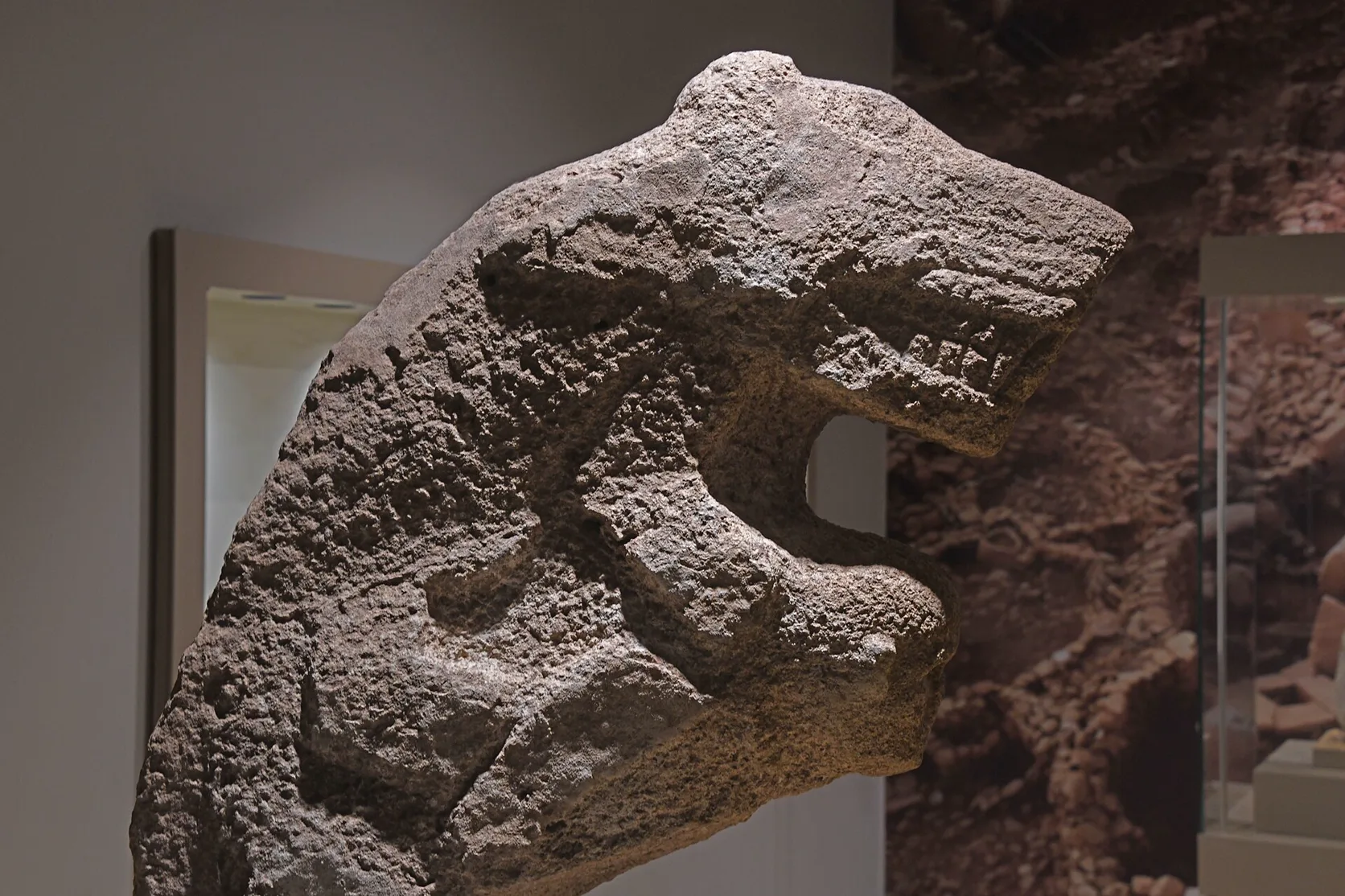
The statue is about 70 centimetres tall. A human figure sits on the back of a leopard. According to experts, it was carved from the region's local limestone.
It was found inside a round building about 3 metres across, with a floor paved with flat stones. The statue stood on a bench running along the wall. According to the ministry, it was found in situ, that is, where it was placed around 11,000 years ago.1
Minister Ersoy said the statue shows "a style not encountered before" and that the discovery would attract wide attention in the scientific world.1
Why does it matter?
Four reasons stand out in the experts' assessments:
- UniqueA person mounted on an animalProf. Elizabeth Carter of UCLA: "To my knowledge, the human figure mounted on an animal is unique."Source ↗
- In situIts context is knownWe know where it stood, how, and next to what. That helps researchers understand what it was used for.Source ↗
- c. 9750 BCEKarahan Tepe was builtBefore writing, the wheel or pottery. About 6,700 years before Stonehenge.Source ↗
- A reversed relationshipHuman and leopardAn earlier Karahan Tepe statue shows a person carrying a leopard on their back. In the new one, the person sits on the leopard.Source ↗
According to Prof. Ergun Laflı of Dokuz Eylül University, the statue "is not only unique in northern Mesopotamia, but also significant in terms of the context". He sees it as one of the very earliest pieces of evidence of religion and cult.2
One important detail: the statue does not mean that people rode leopards. Leopards were never domesticated. The scene most likely expresses an idea or a belief rather than a real event.
What might it mean?
There is no certain answer. We cannot ask the people who made it, because writing was invented thousands of years later. But experts have made suggestions:
- A symbol of power. Jens Notroff of the German Archaeological Institute notes that leopards were strong, dangerous animals. A person shown fearlessly among them, or even apparently mastering one, "could be read as maybe a symbol of power", he says.3
- An important person, an ancestor or a supernatural being. Some researchers suggest the figure may represent a high-ranking individual, an ancestor or a supernatural being.5
- A changing worldview. When Karahan Tepe was built, people were beginning to move from hunting and gathering to settled life. According to earlier assessments by the excavation team, human figures become more prominent in the art of this period.4
Karahan Tepe and the Taş Tepeler sites
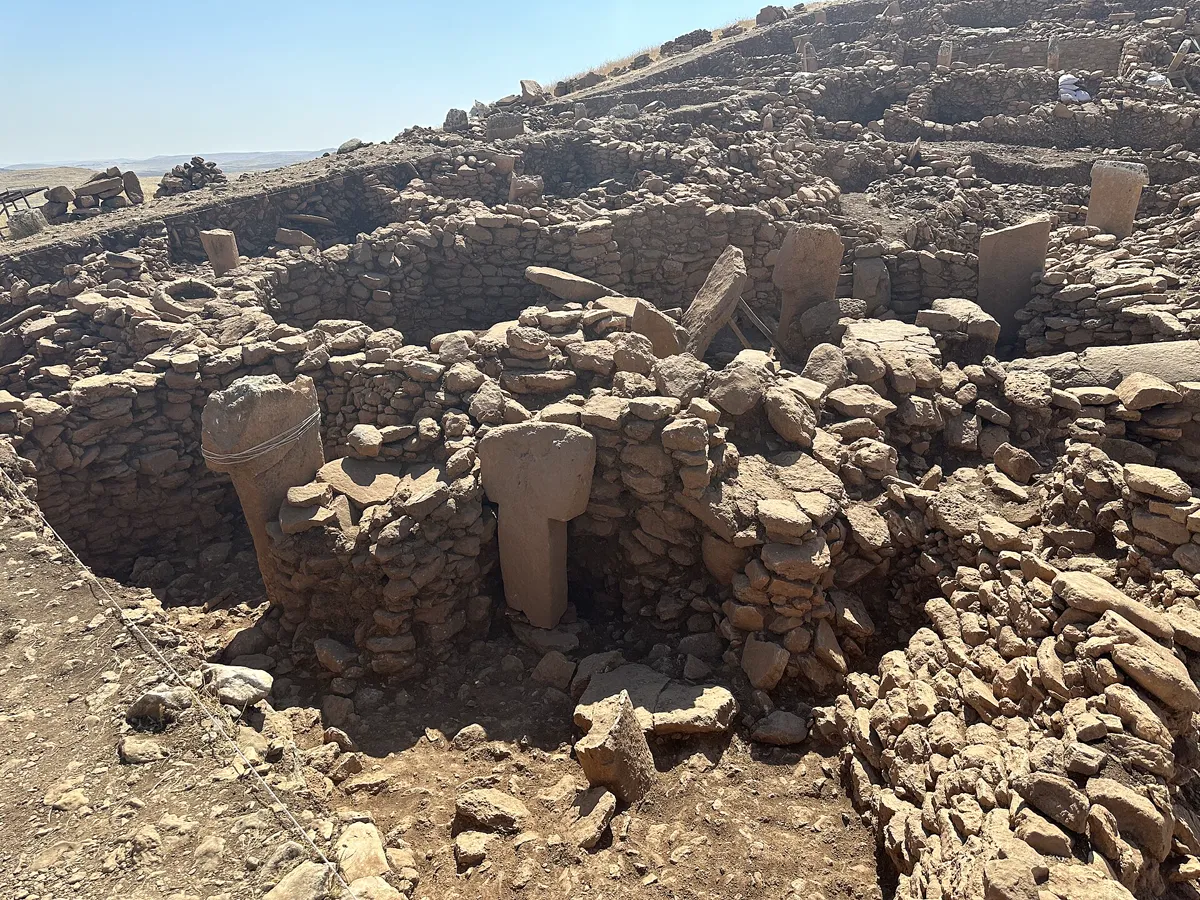
Karahan Tepe lies in Şanlıurfa province, about 46 kilometres east of the famous Göbekli Tepe. It was identified in 1997 by Bahattin Çelik of Harran University. Since 2019 it has been excavated under Prof. Necmi Karul of Istanbul University.6
Karahan Tepe belongs to a group of about 12 sites known as "Taş Tepeler" (Stone Hills), which include some of the oldest known settlements. The excavations are part of the ministry's "Legacy for the Future" project.1
Earlier finds at the site include T-shaped pillars, human heads carved into the bedrock and, in 2023, a 2.3-metre statue of a seated man. Only a small part of the site has been excavated, so more finds are likely.6
Seen from Iceland
The age of this statue is hard to grasp. A comparison helps: the buildings at Karahan Tepe were constructed around 9750 BCE. The first permanent settlers reached Iceland only in the 870s CE. That is a gap of about 10,600 years.
This is one of the things that connects Türkiye and Iceland: Anatolia holds some of the oldest pages of humanity's shared past, and those pages help readers in Iceland, too, understand how the world has changed.
Sources and context
Dates are approximate.
- Hürriyet – Minister Ersoy's announcement, in Turkish (25 August 2026)
- The Art Newspaper – Expert views from Carter and Laflı (28 August 2026)
- Live Science – Comments by Jens Notroff (2026)
- Smithsonian Magazine – The find and the earlier leopard statue (10 September 2026)
- La Brújula Verde – Find context and possible interpretations (26 August 2026)
- Karahan Tepe – background: discovery, location and dating
- Cover photo: Dosseman, Wikimedia Commons, CC BY-SA 4.0
- Site photo: Vincent Vega, Wikimedia Commons, CC BY-SA 4.0
First published on 5 October 2026. Send a comment or request a correction.
İzlandapedia: independent guides, language learning and news.