The colleague nobody thinks to ask about
Raif Efendi seems to have made a habit of being overlooked. He translates German documents in an Ankara office, says little and puts up with the way other people treat him. A younger colleague begins to take an interest. What could this apparently uneventful life possibly contain?
A black notebook supplies the answer. It takes us back to Berlin in the 1920s, where Raif has been sent to learn the soap-making business. His father imagines a practical future for him. Raif is more interested in books, pictures and the possibilities of a city he does not yet know.
In a gallery, a portrait of a woman in a fur coat stops him. He returns to look at it again and again. The woman is Maria Puder, and she has painted the picture herself. When he eventually gets to know her, the image gives way to a person with a working life, firm opinions and little patience for men who expect to direct her choices.
Their friendship becomes an uncertain intimacy. For Raif, being able to speak freely to another person feels almost unimaginable. For Maria, closeness must leave room for independence. His return to Türkiye puts distance between them and tests the relationship. The novel gradually reveals how that earlier life connects to the man in the Ankara office; we leave its final discovery to the reader. [1]
This is a love story built around a difficult question: what happens when the person who matters most is also the person you cannot quite bring yourself to speak to? Affection grows alongside uncertainty. You may find yourself caring about Raif while wishing he would finally say what he means.
How a quiet story earns its force
The novel asks us to meet the same man twice. First we see Raif through someone else’s eyes. Then we hear him explain his life. That change is simple to follow and difficult to forget: details we initially passed over begin to matter. The technique is called a frame narrative, but its effect needs no technical explanation. We discover how incomplete our first judgment was.
Raif also unsettles the expectation that a male lead should be confident and decisive. He hesitates. He retreats. At times he seems unable to act on the very feelings that matter most to him. The book gives those difficulties room without requiring us to excuse every choice.
Maria gives the relationship its friction. She wants affection without surrendering control of her life. Her objections to the roles women are expected to play make their conversations worth attending to in their own right. A further question follows: because we encounter her through Raif’s memories, how much room does his account leave for the woman beyond his hopes?
The office matters as much as the gallery. Workplace status, assumptions about success and expectations of men and women enter the characters’ private lives. Ali’s interest in a person’s feelings is also an interest in the world that makes those feelings difficult to express.
These qualities provide a useful way to discuss the novel’s importance. Sales show that a book is circulating; a classics series records an editorial decision. The stronger test for a reader is what the writing enables us to notice, and whether another reading might change our minds.
Five moments to watch for
Page numbers depend on the edition, so these examples identify moments in the story. The short excerpts are translated here from Turkish. The comments are our reading, and the ending remains undisclosed. [1]
01 The office before the notebook
Notice how readily people decide what Raif is worth. Silence gets treated as emptiness; a failure to protest gives others permission to dismiss him. The reader can easily adopt some of those assumptions.
Keep that first impression in mind. When the notebook opens, the contrast gives the book much of its emotional force. Someone who seemed to have nothing to say suddenly has a life we want to hear about.
02 The return visits to the portrait
Raif finds an imagined closeness in an image before he has met the person it depicts. Meeting Maria begins the harder task of knowing a woman who can answer back.
The title’s Madonna refers to representations of the Virgin Mary in art. Maria’s self-portrait gives the book its title and creates a distinction that runs through the relationship: looking at someone and understanding them are different experiences.
03 Maria laying down her boundaries
When Maria questions the submission men expect from women, listen to the argument as hers. She is explaining what a relationship would have to allow her to remain herself.
The scene gives a recognisable shape to a question that still matters: how much space do we leave for the wishes of someone we love? Maria’s resistance becomes part of the attraction and part of the difficulty.
04 A small change in Raif’s thinking
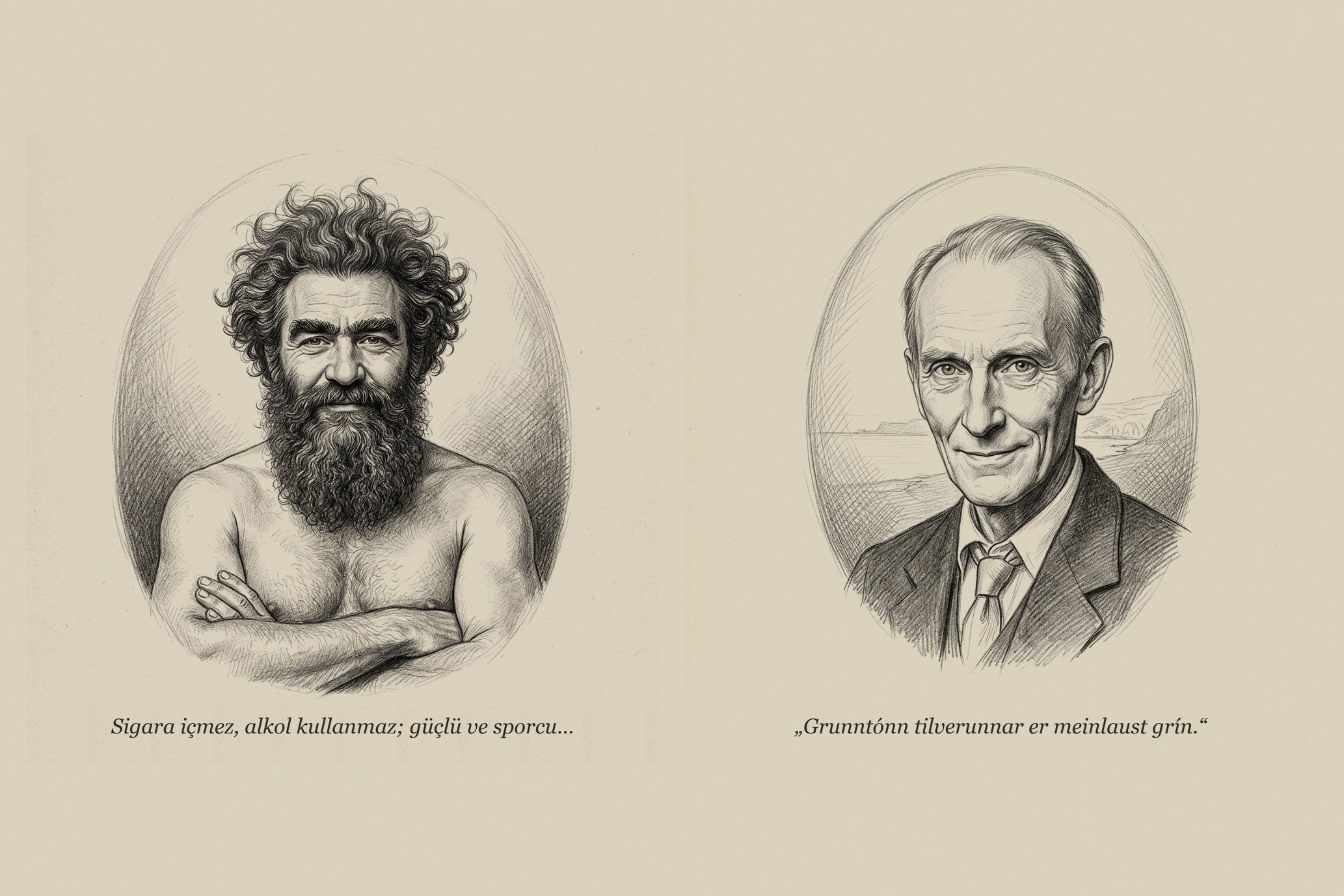
“This person cannot understand me!”
“This person understands me!”
The shift feels enormous to someone accustomed to keeping himself apart. The hope of being understood gives him a reason to approach another person.
Ali adds an awkward detail: Raif recognises that neither certainty was based on firm knowledge. The passage lets us share his hope while seeing the risk of mistaking a deep wish for something already true.
05 Someone finally reading his words
The notebook changes the terms of our interest. Instead of accepting what others say about Raif, we listen to the account he has kept to himself.
The man has not changed; our access to him has. That is one reason the opening can feel different if you return to it after finishing the book. The apparent blankness was partly a failure to look.
The critics disagree—and that is useful
The novel can make a reader sympathetic and impatient at once. Its critical reception offers several ways to think about that tension. These are brief summaries of the named critics’ views, rather than quotations.
Nâzım Hikmet wanted more from the opening
In Kaya Genç’s account of a May 1943 letter, Hikmet admires the Ankara section’s social observation but objects to the move into the Berlin romance. He feels that possibilities established at the beginning go undeveloped. Our source is Genç’s discussion in The Believer. [10]
Jörg Plath values the view beyond the couple
Reviewing the book on 8 January 2009, Plath finds three perspectives together: Türkiye of the period, Berlin and an enduring love story. He sees the framing account in Ankara as a restraint on excessive sentimentality. [11]
M. A. Orthofer questions Raif’s passivity
Orthofer’s review of 6 November 2017 finds Raif too unassertive and questions the melodrama of the resolution. Yet Maria’s contrasting character and the settings make this a distinctive, appealing variation on a familiar love story. [12]
You do not have to settle those disagreements before reading. They point to a rewarding question for a book group: does Raif’s hesitation deepen your sympathy, or does it put distance between you and him? Understanding a character can include arguing with him.
A Turkish classic with a new chapter in English
Penguin lists a new Clothbound Classics hardback for 15 October 2026. It arrives ten years after Maureen Freely and Alexander Dawe’s English translation was published in 2016. A novel first issued as a book in 1943 is still being introduced to new readers. [4] [5]
That is the occasion for this İzlandapedia feature. The book also belongs naturally in a publication connecting Iceland and Türkiye: it offers an entry into Turkish literature through a story of living abroad, finding someone to trust and struggling to make yourself understood. Readers who do not know Turkish can approach it through the English edition.
How widely is it read? What the numbers can tell us
We could not establish a verified worldwide readership total covering every language and edition. Copies sold and people who have read a book are different measures. One copy can be shared or borrowed from a library; another can be bought and left unread. The available figures need to be read with their limits in view.
Copies sold, according to Penguin Libros’ Spanish publicity. The same text mentions translations into around ten languages. [7]
By 2 November. [6]
The first card draws on publicity discussing Turkish success without a country or period breakdown. It cannot establish current worldwide sales or a complete translation inventory. [7]
Even with these limits, the picture is meaningful: the novel has travelled beyond Türkiye, found homes with different publishers and remained in circulation through new editions. The records below provide concrete examples. Each establishes an opening into another reading community, without telling us how many people in that language have read the book.
One story in different languages
- French: La Madone au manteau de fourrure, translated by Jean Descat. France’s national library catalogue records a 2007 edition from Le Serpent à plumes. [8]
- German: Die Madonna im Pelzmantel, published by Dörlemann in Ute Birgi-Knellessen’s translation. [9]
- English: Madonna in a Fur Coat, translated by Maureen Freely and Alexander Dawe, Penguin, 2016. The new hardback is listed for 15 October 2026. [4] [5]
- Spanish: Madona con abrigo de piel. Penguin Libros dates its Salamandra ebook edition to January 2018. [7]
The French record also makes an important point: the novel’s international journey began before its English translation. Translators, publishers and readers have joined that journey at different moments.
The Sabahattin Ali behind the novel
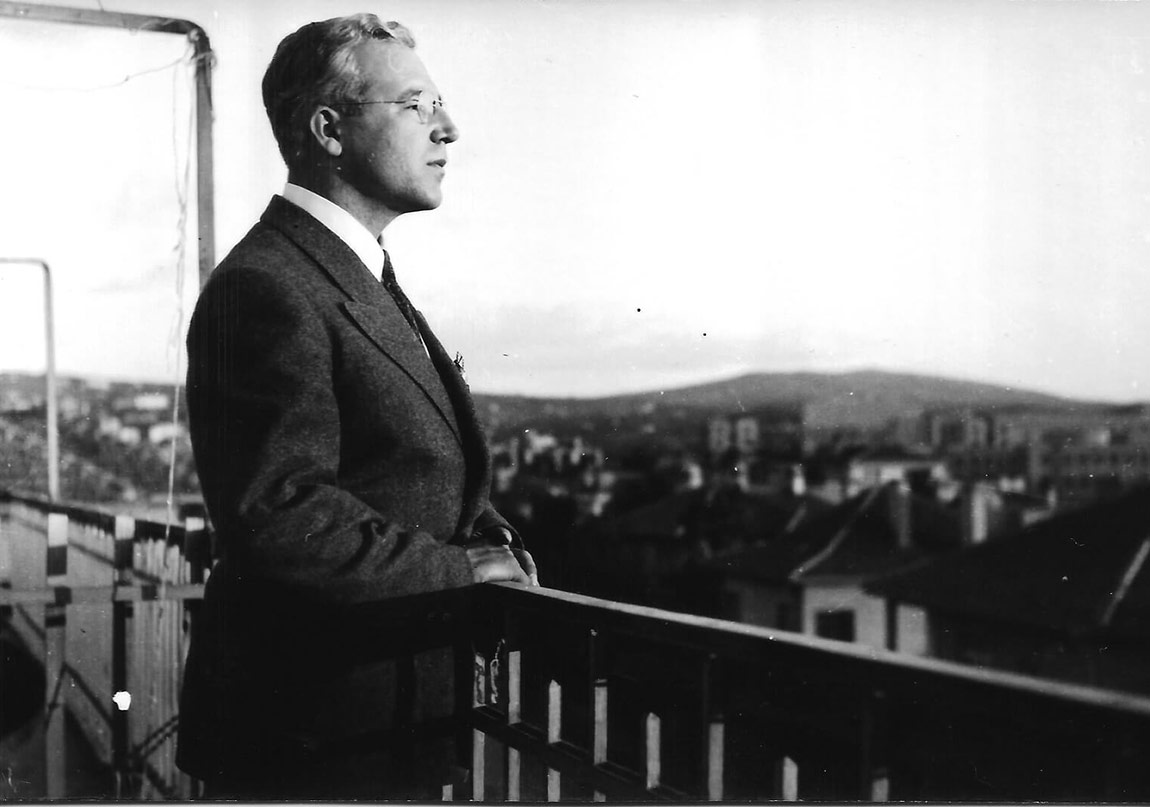
Born in 1907 in Eğridere, now Ardino in Bulgaria, Sabahattin Ali worked as a teacher and spent 1928–1930 in Germany. He wrote stories, poetry and novels and worked as a translator. He experienced political pressure and imprisonment, and launched Marko Paşa with Aziz Nesin in 1946. He was killed in 1948 while trying to cross into Bulgaria, aged 41. [2] [4]
His time in Germany allows us to draw a connection with Raif’s journey. It does not establish a one-to-one correspondence between author and fictional character. Understanding the novel involves looking at how a narrative has been made, alongside any interest in the experiences that may have fed it.
Kürk Mantolu Madonna was serialised in Hakikat between 18 December 1940 and 8 February 1941, then published by Remzi Kitabevi in 1943. Ali’s earlier novels included Kuyucaklı Yusuf (1937) and İçimizdeki Şeytan (1940). That chronology helps us see him as more than the author of a single famous book. [3]
Reading further into his work gives us the opportunity to compare his approaches to inner life and a person’s place in society. A widely recognised title can become the beginning of a much broader literary encounter.
Who is likely to enjoy it?
Choose this novel if you like character-driven stories, conversations that change a relationship and the feeling that an ordinary person may contain an extraordinary private history. It asks for patience with thought and hesitation. A reader looking for constant action may find the pace slow.
For someone new to Turkish fiction, the emotional situation is a straightforward way in. You do not need to recognise every historical reference to understand the fear of saying too much, or the disappointment of saying too little. The English edition is titled Madonna in a Fur Coat; the Turkish title is Kürk Mantolu Madonna.
It is an inviting place to meet Sabahattin Ali because it shows what attentive storytelling can do. By the time you close the notebook with its narrator, the quiet person in the office may no longer seem ordinary. You may also be less certain about the people you thought you had already understood.
Sources and editorial note
Sources checked on 10 October 2026. Publishing news and biography are sourced; close readings and literary assessments are İzlandapedia’s interpretation. Publisher publicity is not treated as an independently verified worldwide readership total. Brief excerpts were translated from the original Turkish for this feature. The linked novel includes its ending.
- Sabahattin Ali, Kürk Mantolu Madonna (1943)Original Turkish text on Wikisource. Plot and characters; the link contains the complete novel.
- T.C. Kültür ve Turizm Bakanlığı · Sabahattin AliTeaching, time in Germany, works and the final years of his life.
- Türk Edebiyatı İsimler Sözlüğü · Sabahattin AliAhmet Yesevi University. Works, serialisation and first-edition details.
- Penguin · Madonna in a Fur CoatEnglish translation, 2016 ebook record and author biography.
- Penguin · Clothbound Classics · 2026New hardback listed for 15 October 2026; ISBN 9780241820445.
- Guardian · 02.11.2025
- Penguin Libros · Madona con abrigo de pielSalamandra, January 2018. Sales and translation claims from publisher publicity.
- Bibliothèque nationale de France · La Madone au manteau de fourrureBibliographic record for the 2007 edition of Jean Descat’s translation.
- Dörlemann · Die Madonna im PelzmantelGerman edition, translated by Ute Birgi-Knellessen.
- Kaya Genç · A Young Turk in Love · The Believer24 October 2016. Account of Nâzım Hikmet’s 1943 critical response.
- Jörg Plath · Crescendo der Hoffnungslosigkeit · Deutschlandfunk Kultur8 January 2009. Review discussing structure and social setting.
- M. A. Orthofer · Madonna in a Fur Coat · Complete Review6 November 2017. Review of characterisation, passivity and melodrama.
İzlandapedia · A bridge between Iceland and Türkiye through culture, everyday life and language.